Briefly tell us about your book.
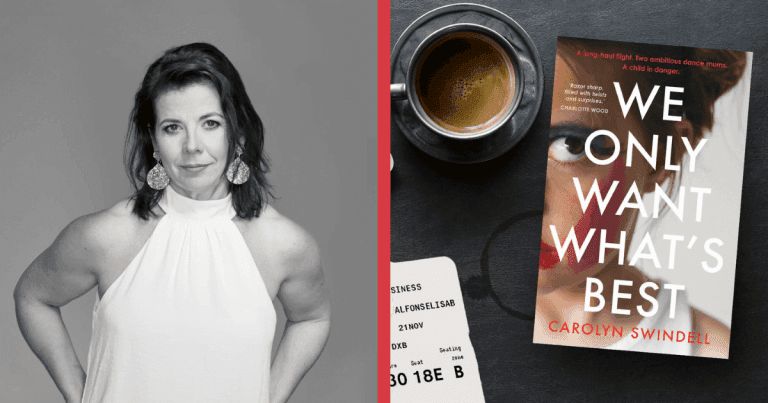
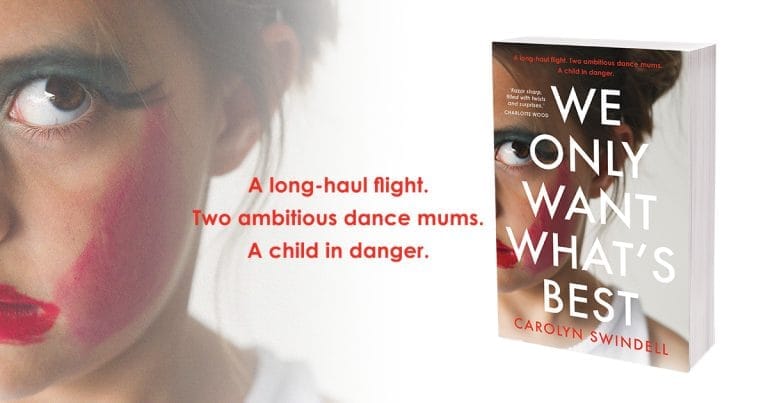
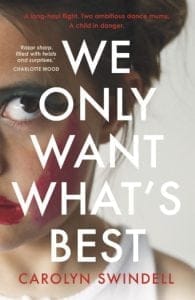
We Only Want What’s Best is set on a plane between Sydney and LA where a group of young dancers are flying to Disneyland to perform. Two dance mothers from very different worlds try to form a friendship. When one finds a USB containing disturbing images of the other’s child, she fights time and her own fears to try to work out whether this is evidence of a child in danger or – as the other mother claims – if she is simply too unsophisticated to understand what’s really going on and should just butt out of another mother’s parenting.
What inspired the idea behind this book?
A couple of things. I visited MONA in Tasmania with a very small child (rookie error). This made it stressful but also prevented me from really immersing myself in the experience and I felt like an outsider. I’m not a terrifically visual person and I often don’t “get” a lot of the art, but really value when someone more knowledgeable can explain it.
Not long before, there had been an exhibition of Bill Henson’s work in Melbourne and a huge public kerfuffle about that and I wasn’t able to be clear enough on what I thought of the art to have a view, but felt it important to me that I should know what was right because national censorship was at issue.
Some years later, there was a case at a dance studio in Sydney where a mother had been convicted of supplying images of her daughter to a paedophile dance teacher and her husband had testified in her defence that she had seemed under the control of the dance teacher. That fascinated me.
These three thoughts came together, and I wondered whether I would be brave enough to stand up for what was right if I wasn’t confident enough in my own reading of a situation to know exactly what was right.
What was the research process like for the book?
A lot of reading. I was also very fortunate to be able to speak to some people with insights from the world of dance and art and I’m very grateful to them. I spent an inordinate amount of time on-line looking at Business Class seats and cabin layouts too!
What are you hoping the reader will take away from reading your book?
I guess that question about who decides. Who decides what is right? Who decides what is art? Who decides when another parent is making a bad call? As we become more and more outraged as a society, I wonder how people get the confidence to be so sure they are right about something.
What was the most challenging part of writing this book?
I had a really fancy split narrative, disrupted timeline structure for the book which I loved – but no one else could understand. I spent a long time trying to execute that before realising that this story was better told with a simpler structure. It was hard to let go of so much work. Once I did though, finishing the book became a whole lot simpler.
I also didn’t want to try to write about those events that inspired the idea – it is a story about people and moral dilemmas and judgements inspired by some questions that came up for me when thinking about how I might act in similar situations.
How did you think of the title of the book?
All parents want what’s best for their child and often that veil leads us to make mistakes. It also means, sometimes, that getting what’s best for our own child might have an impact on someone else’s child. So, is that still best?
We also all want a Business Class upgrade (don’t we?).
If you could give one piece of advice to aspiring writers, what would it be?
Stick with it. I’m 53 years old and finally getting my debut novel published, something I was beginning to think may never happen. Have faith in your work and stick with it.
Leave a Reply