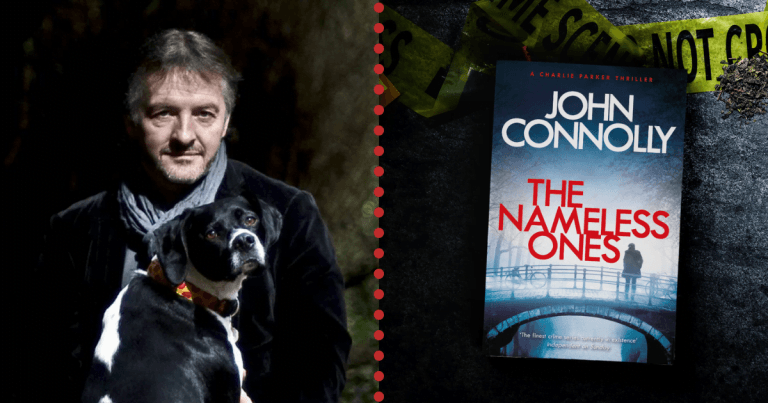
Briefly tell us about your book.
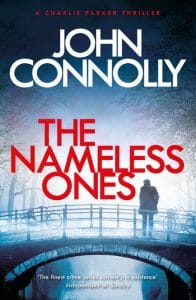
The Nameless Ones is a revenge thriller. After the murder of his friends, the semi-retired hitman Louis sets out to hunt down the culprits, a cadre of Serbian criminals, before they can reach the safety of their homeland. I’ve always enjoyed globe-trotting thrillers, but had never tried to write one until now. It was also a good excuse to visit Vienna and Belgrade. It might not have been quite so much fun to set it in Hull, or Basildon, no offence meant to the citizens of either.
If I looked at your internet history, what would it reveal about you?
Well, apart from the fact that I’d been sharing my password too widely, it would reveal that I spend a lot of time looking at websites about books and music, and buying too much of both. In my defence, I do host a weekly radio show for RTE, ABC to XTC, and that requires a certain amount of research. Mind you, I do seem to be accumulating a lot of new vinyl now that I have a record player in my office once again. I like to think that these are gentle vices, though.
Does the creative process get easier for you with each book?
I understand now, after 30+ books, that doubt is part of the process, but that doesn’t make it any easier to live with. Every book I’ve published, I’ve wanted to throw it away after about 20,000 words. That’s the point at which I begin doubting the value of the central idea, its ability to sustain 400 pages, and my own capacity to complete the book. As I’ve said, I know that it’s an element of the creative process, but I live with the possibility that, someday, I might be right.
What’s some great advice that you’ve received that has helped you as a writer?
The novelist James Lee Burke, who was a big influence on my work, once told me that you have to learn to ignore the catcalls and the applause. It took a while, but I learned not to worry too much about reviews, and I don’t go out of my way to read them. The tendency is to believe the bad ones and disbelieve the good, neither of which is helpful.
If you could give one piece of advice to aspiring writers, what would it be?
Finish everything you start. I think it was Ray Bradbury who said that professionals are amateurs who finish things, but it’s a good starting point, even for non-professionals. Every time you abandon a creative project, whatever it might be—a book, a painting, a piece of music—you chip away a little piece of your confidence, and you never get it back. Once you write the first words of a story, you have to commit psychologically to writing the last ones too. It’s as simple—and as difficult—as that.
Leave a Reply