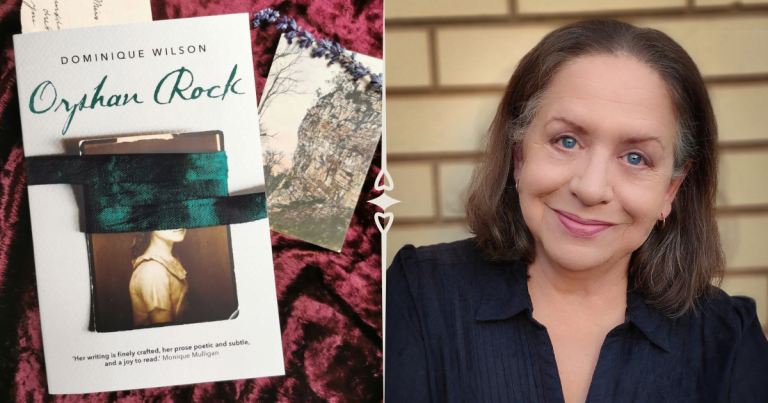
Briefly tell us about your book.
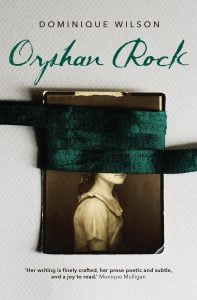
Orphan Rock is set in Sydney and later in Paris, beginning in the late 1800s. It explores the role of women over the following decades, and how many women resisted the expectations that were placed on them. It explores issues of loyalty, racism, sexism, and questions about the Australian identity.
What are you hoping the reader will take away from reading your book?
I hope people are able to relate in some ways to Bessie, Lottie and Kathleen, because the struggles these women went through are struggles women are still experiencing today. Also how much we can learn from history – while researching the Spanish Flu pandemic that happened at the end of WWI, I was amazed at the similarities between it and the COVID-19 pandemic. So much so that I wrote about these on my blog here. Spanish philosopher George Santayana is credited with saying, ‘Those who cannot remember the past are condemned to repeat it’. I think that’s very true.
Does the creative process get easier for you with each book?
No, I’d say it get more difficult, because I keep setting the bar higher, wanting each new book to be better than the last. On the one hand, I have more experience, so I know there’ll be days when nothing will work, but that I just have to keep going. But on the other hand, I can now pick things in the other books I wish I had done better, or differently. So I am constantly looking at the validity of my initial idea, looking for possible alternatives that might best recreate my initial vision for a particular story.
Do you write about people you know? Or yourself?
My initial response is to say ‘neither, because my characters are all fictional’. But literary theorists such as Mikhail Bakhtin have argued that the writer’s text is multi-voiced, influenced by the writer’s experiences, which is influenced by other people and events, which in turn are also influenced by other people and events. So you end up with the voice of the author [albeit in a refracted way], the voice of the narrator, and the voice of the characters, all interconnected. By that theory, there is an element of both my own beliefs and experiences in this novel, as well as the experiences and beliefs of the people I know, even if the characters within the novel reject or change those ideas to show ideals dissimilar to my own. So my response to this question should probably be ‘both’!
If you could give advice to aspiring writers, what would it be?
1. Don’t wait for the muse, she’s too flighty to be relied upon – but you’ll find the more you write, the more the muse will visit.
2. Be professional – ie: put in the work, accept criticism, meet deadlines.
3. Read. Read constantly, in the genre you want to write and in other genres as well, because they all have something to teach you – even if it’s only what you don’t want to do.
4. Be kind and generous towards other writers – buy their books [or ask your library to stock them], promote their books, tell your friends about books you’ve enjoyed, because word of mouth is the best advertisement! And you’ll find they’ll do the same for you.
Leave a Reply