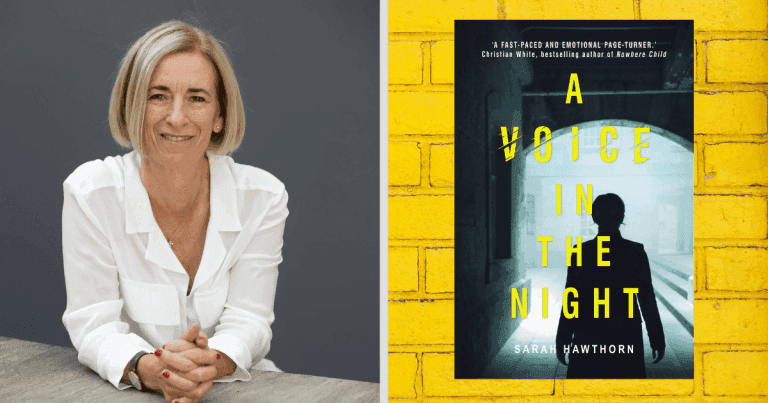
What inspired the idea behind this book?
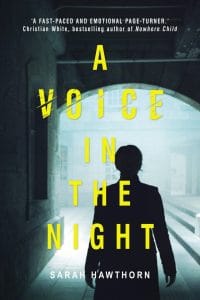
While in New York a few weeks after the 9/11 tragedy, I visited a desolate Ground Zero, which was a haunting and harrowing experience. Fifteen years later, in New York again, I went to pay my respects at the World Trade Center Memorial. In a different way, that was equally moving. Seeing almost 3000 names etched into the bronze around the Towers’ footprints brought home the enormity of the loss of life. But also made me ponder some of the stories I’d heard about people using the tragedy as a cover to ‘disappear’. I thought that would make a great premise for a book, and the idea grew from there.
What was the most challenging part of writing this book?
A thriller by necessity must have lots of suspects and red herrings, take the reader down rabbit holes, and deflect the narrative away from the true perpetrator. At the same time, everything has to make sense and every character’s actions must be feasible. This, for me, was the trickiest part, and piecing the bits together was like solving a Rubix cube. Every time I thought I’d got all the different coloured sides in place, I’d turn over the cube to see that the bottom was still a mess, and it was ‘back to the drawing board’.
What’s the easiest and most difficult parts of your job as a writer?
Plotting is the aspect of creating a novel that I find the hardest, and most time-consuming. Once I’ve come up with a concept and penned the first few scenes or chapters, I hit a road-block. As I’m not comfortable being a pantser (writing by the seat of my pants)—probably because I’m fundamentally lazy and don’t want to spend time later on ditching scenes and reworking whole chunks—I then like to develop a well fleshed out chapter-by-chapter roadmap. Once done, although many times I’ll deviate from and revise the outline, I enjoy the far more enjoyable activity of actually writing the book.
Do you write about people you know? Or yourself?
No, I don’t—not consciously, anyway. I learned my lesson after struggling with my first book (which is still in the bottom drawer), where I based all the characters and plot on real people and events. Remaining true to the facts, and being careful not to offend anyone, acted as a brake on taking liberties with plot, exaggerating anyone’s unflattering characteristics or letting them act ‘out of character’. So now, although every character I portray doubtless has elements of myself, or someone I know, each person is imaginary. As we don’t have a personal relationship, it makes my role much easier, I can make them behave however I wish and no one’s feelings will be hurt. Having said that, for fun I occasionally name characters for people I know.
If you could give one piece of advice to aspiring writers, what would it be?
Don’t assume it will be easy or try to take short cuts. To reap the rewards, like any profession, the core skills have to be studied and practised. I’d spent my whole career writing—as a journalist, business writer and publicist—and whilst many aspects of these disciplines helped my fiction-writing journey (particularly editing skills, and having my work ripped to shreds by others) I soon realised novel-writing was a whole different game. Fortunately, there are some great courses available for aspiring authors and I was lucky enough to learn craft with UK’s Curtis Brown Creative, and UCLA (University of California, Los Angeles).

Leave a Reply