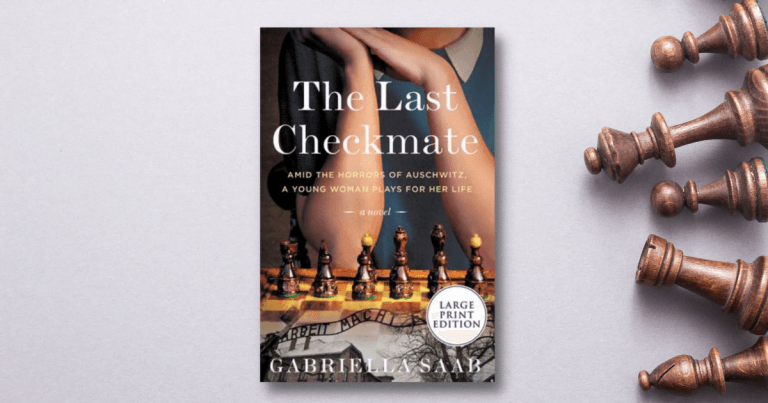
Maria Florkowska is many things: daughter, avid chess player, and, as a member of the Polish underground resistance in Nazi-occupied Warsaw, a young woman brave beyond her years. Captured by the Gestapo, she is imprisoned in Auschwitz, but while her family is sent to their deaths, she is spared. Realizing her ability to play chess, the sadistic camp deputy, Karl Fritzsch, decides to use her as a chess opponent to entertain the camp guards. However, once he tires of exploiting her skills, he has every intention of killing her.
Befriended by a Catholic priest, Maria attempts to overcome her grief, vows to avenge the murder of her family, and plays for her life. For four gruelling years, her strategy is simple: Live. Fight. Survive. By cleverly provoking Fritzsch’s volatile nature in front of his superiors, Maria intends to orchestrate his downfall. Only then will she have a chance to evade the fate awaiting her and see him punished for his wickedness.
As she carries out her plan, and the war nears its end, she challenges her former nemesis to one final game, certain to end in life or death, in failure or justice. If Maria can bear to face Fritzsch – and her past – one last time.
From debut novelist, Gabriella Saab comes this unforgettable and heart-wrenching story of courage, hope and justice, perfect for readers of Heather Morris’ The Tattooist of Auschwitz and watchers of The Queen’s Gambit.
The novel follows protagonist Maria across multiple timelines: In April 1945, three months after she escaped Auschwitz as she returns to the camp to challenge Fritzsch to one final match. In 1941, aged fourteen, when she is recruited by the Polish resistance in Warsaw, delivering blank baptismal certificates to Jews. And three months later, when she is captured and sent to Auschwitz, where she endures unimaginable horrors, including the loss of her family. Saab uses the shifting timelines effectively throughout the novel, as learning about the atrocities Maria suffered in the camp raises the stakes of the chess match in the present, making for some tense reading.
Though Saab has taken some creative liberties in writing this – which she outlines in the author’s note – the novel is meticulously researched with several real-life historical figures featuring on-page, including Father Kolbe and Karl Fitzsch. Saab also takes great care in her portrayal of Auschwitz, vividly depicting the violence and horrors that took place in the camp as well as the lengths prisoners had to go to survive.
Powerful, moving and unputdownable, The Last Checkmate is an incredible debut from a rising talent that offers readers a unique take on this popular sub-genre of historical fiction.

Leave a Reply