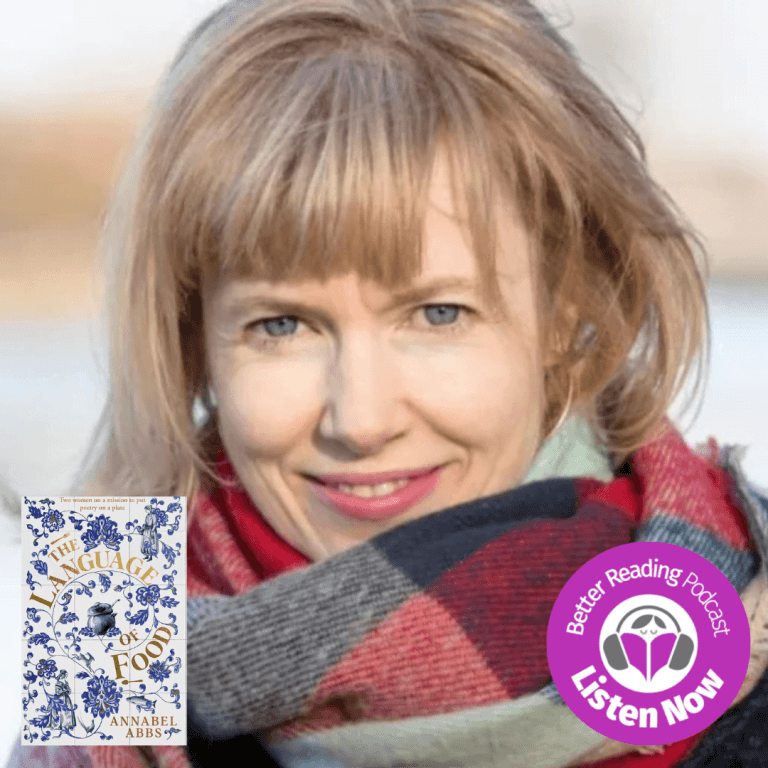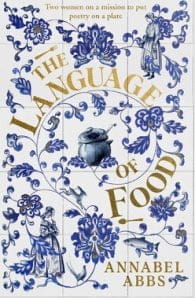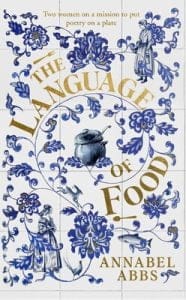
Uplifting and Inspiring: Read an Extract from The Language of Food by Annabel Abbs

Uplifting and Inspiring: Read an Extract from The Language of Food by Annabel Abbs

‘Novelettes of romance. Have you none of those for me?’

I blink and try to compose my thoughts. Has he even read my letter? Or the fifty poems in my best copperplate that I delivered, by hand, six weeks ago? If not, why did he write and invite me to meet him? To my chagrin, I feel my throat close up, my bottom lip waver.

‘Yes,’ continues Mr Longman, speaking as if to himself. ‘I could consider a gothic romance.’

I brace myself, biting down on my wavering lip. A spark of something – fury? Irritation? – leaps inside me. ‘Some of my poems have been published more recently, in the Sudbury Pocket Book and the Ipswich Journal. I am told they are good poems.’ My burst of audacity surprises me. But then Mr Longman shrugs and his eyes slide to the ceiling, which is low and sagging.

‘It is no good bringing me poetry! Nobody wants poetry now. If you cannot write me a little gothic romance . . .’ His palms are open and splayed upon his desk in a gesture of helplessness.

I stare at his empty palms and feel my insides – my spirit, my audacity – being scooped out and cast away. Ten years of labour – in vain. The emotion, the effort, everything that has been sacrificed in the writing of my poems, all for nothing. Perspiration runs in rivulets down the sides of my ribcage and I feel a shortness of breath as if my throat is constricting.

The painful beatings of a breaking heart are hush’d to stillness . . .Mr Longman scratches noisily at his head and continues staring at the ceiling. The soles of his shoes tap at the floorboards beneath his desk, as if he has forgotten my presence. Or perhaps he is deciding whether I can be trusted to write a gothic romance. I give a discreet cough which sounds more like a harried gulp. ‘Sir, could I possibly have my poems back?’

He claps his hands and jumps to his feet so abruptly the gold chains of his fob watch jangle and the silver buckles on his shoes rattle. ‘On second thoughts, I have sufficient novelists at present. So do not bring me a novelette.’

‘My manuscript? Did you not receive it, sir?’ The words limp from my throat, barely audible. Is it possible he’s lost my poems? Carelessly mislaid them among his maps and papers? And now he is about to dismiss me . . . empty-handed. Not even the promise of a commissioned novelette. I told you so, whispers my voice of doubt. Imposter . . . imposter . . . Surely your puny efforts at poetry have been put upon the fire . . . I scan the room, instinctively seeking out a grate, a wisp of my verse among the ashes.

All of a sudden Mr Longman claps his hands a second time. I look at him, wondering if this is his manner of dismissal. But he is staring at me, his eyes alight, his hands clasped. ‘A cookery book!’

I frown in confusion. The man is both rude and obscure, I think. Who on earth does he think I am? I may be thirty-six and unmarried, my dress may be streaked with sweat, but I am no aproned household servant.

‘Go home and write me a cookery book and we might come to terms. Good day Miss Acton.’ His hands splash over the detritus of his desk and for a moment I think he is hunting for my poems. But then he gestures at the door.

‘I do not – cannot – cook,’ I say lamely, moving like a somnambulist towards the door. The inside of my head is dulled with disappointment.

Every bit of bravura slipped clean away…
Continue reading the extract here…

Buy a copy of The Language of Food here.

Reviews

A Delicious Historical: Read Our Review of The Language of Food by Annabel Abbs

Review | Our Review

15 March 2022

A Delicious Historical: Read Our Review of The Language of Food by Annabel Abbs

    Related Articles

    Podcast: Annabel Abbs on Why We Need More Food in Fiction

    Podcast

    21 June 2022

    Podcast: Annabel Abbs on Why We Need More Food in Fiction

      Publisher details

      Synopsis

      Eliza Acton, despite having never before boiled an egg, became one of the world’s most successful cookery writers, revolutionizing cooking and cookbooks around the world. Her story is fascinating, uplifting and truly inspiring.

      Told in alternate voices by the award-winning author of The Joyce Girl, and with recipes that leap to life from the page, The Language of Food by Annabel Abbs is the most thought-provoking and page-turning historical novel you’ll read this year, exploring the enduring struggle for female freedom, the power of female friendship, the creativity and quiet joy of cooking and the poetry of food, all while bringing Eliza Action out of the archives and back into the public eye.

      England 1835. Eliza Acton is a poet who dreams of seeing her words in print. But when she takes her new manuscript to a publisher, she’s told that ‘poetry is not the business of a lady’. Instead, they want her to write a cookery book. That’s what readers really want from women. England is awash with exciting new ingredients, from spices to exotic fruits. But no one knows how to use them

      Eliza leaves the offices appalled. But when her father is forced to flee the country for bankruptcy, she has no choice but to consider the proposal. Never having cooked before, she is determined to learn and to discover, if she can, the poetry in recipe writing. To assist her, she hires seventeen-year-old Ann Kirby, the impoverished daughter of a war-crippled father and a mother with dementia.

      Over the course of ten years, Eliza and Ann developed an unusual friendship – one that crossed social classes and divides – and, together, they broke the mould of traditional cookbooks and changed the course of cookery writing forever.

      Annabel Abbs
      About the author

      Annabel Abbs

      As the daughter of an impoverished, struggling poet, Annabel Abbs spent her childhood in circumstances not dissimilar to Lucia's - travelling and moving school/home/language with a 'present-but-absent' father fixated on his inner world. Annabel grew up in Bristol, Wales and Sussex, before studying English Literature at the University of East Anglia. Her debut novel, The Joyce Girl, won the 2015 Impress Prize and was longlisted for the 2015 Bath Novel Award and the 2015 Caledonia Novel Award.She is now completing her second novel, based on the life of Frieda von Richthofen, wife and muse to D.H. Lawrence. Before Annabel began writing, she spent 15 years running a marketing consultancy where her clients included Reuters, Sony and the FT. She lives in London and Sussex with her husband and four children.

      Books by Annabel Abbs

      COMMENTS

      Leave a Reply

      Your email address will not be published. Required fields are marked *