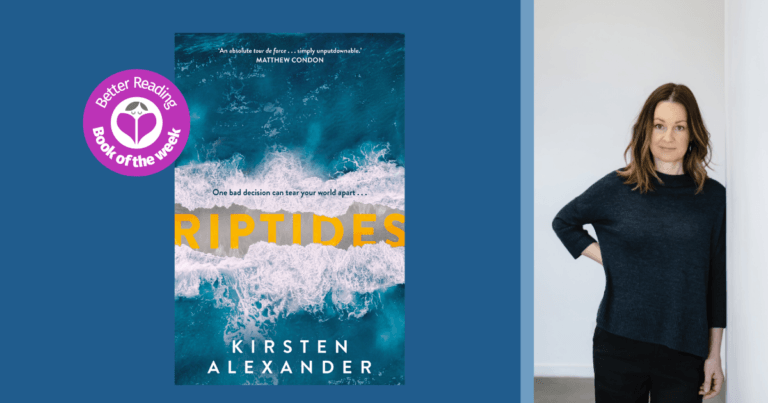
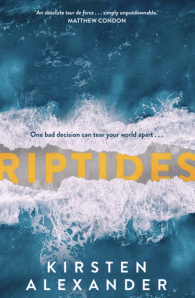
Riptides is a gripping family drama about dreams, choices and consequences. Can you tell us a bit more about the book?
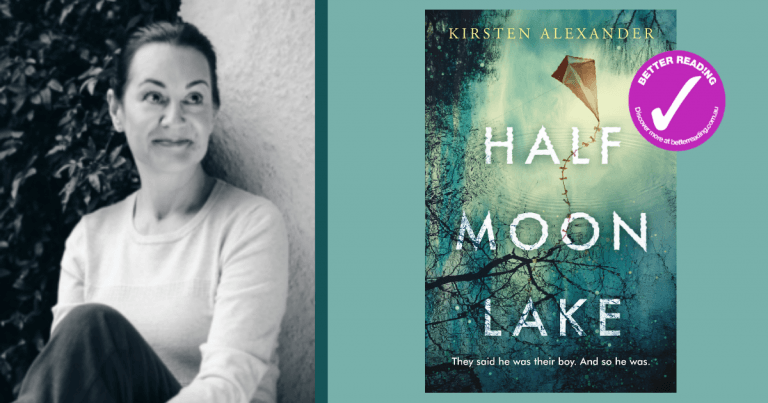
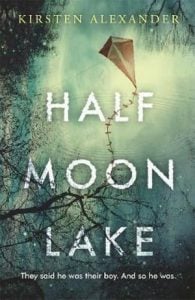
Riptides is the first manuscript I wrote but the second one to be published, after Half Moon Lake. My initial timing in pitching Riptides to publishers was terrible, though I didn’t know that back then! The manuscript received a nod from the Victorian Premier’s Literary Award and was shortlisted in PEN America’s Bellwether Prize (under another title since I’m bad at titles), so I thought it might find a home. Every publisher who read it was kind in their rejection, but consistently said that neither the location (Brisbane) nor era (1970s) was interesting or saleable. But things go in waves, and in the past few years some wonderful stories by Queensland writers have found popular national interest (not for the first time, obviously). I’ve said repeatedly that I think I owe Trent Dalton a debt of gratitude, despite the fact we’ve never met. I’m riding on other writers’ waves!
What inspired the idea behind this novel?
I’m not exactly sure. I wanted to write a story set in Brisbane in the 1970s because I grew up in Brisbane and didn’t leave there until I finished university so I know it well, and the 1970s seemed like such a fascinating and complex time. Australia had a radical government that introduced free healthcare, free tertiary education, took Australia out of Vietnam, fought for equal pay for women, introduced legislation to give land rights back to indigenous people, and more. And that all happened in only three years! At the same time there was a string of natural disasters, cultural shifts in music, fashion, art — and then our government was sacked by the Queen. So, interesting times! I also knew that the story I wanted to tell revolved around people behaving badly and then trying – and failing – to keep that secret. The rest came from some dark corners of my mind that probably don’t bear thinking about.
Can you tell us about your research process for this book?
I love doing research, and researching the 1970s was great fun. For Riptides I watched old ABC news footage, Australian films from the early 1970s (including Wake in Fright, Alvin Purple, The Adventures of Barry McKenzie. It were a great time for Australian cinema, especially the second half of the decade which gave us Sunday Too Far Away, Picnic at Hanging Rock, Mad Max, My Brilliant Career and The Chant of Jimmy Blacksmith) and tv shows including the truly bizarre Aunty Jack, and found some newspapers and magazines online. I listened to music from the era and made Spotify playlists for the characters. You can listen to those here, in my public library:
Charlie https://open.spotify.com/playlist/7JVKNeBjtPAoRDF06JWcUj
Abby https://open.spotify.com/playlist/4piv1Fs1dhalFOO8ZMUwZI
What is something that has influenced you as a writer?
Failure. Rejection. Criticism. I don’t say any of those words lightly. They’re heavy, soul-destroying words. I don’t like being told my writing is uninteresting or unwanted. No one does. To have a publisher say no thank you or to read a negative review is devastating. And I know writers aren’t supposed to look on Goodreads but of course I have, and to have a reader casually dismiss years of work with a few cutting remarks is awful. However, I’ve learned from every punishing word I’ve read, and I’d encourage other writers to do so if they can. What I learned varied – that I need to work on pacing, need to pay deeper attention to characters’ complexities. It’s not personal. That person on Goodreads and the online reviewer don’t know you – they’re simply offering their opinion, and sometimes they’re very well-read. And the publisher who says no has clinical market-based reasons to do so. Of course you should shrug off unconstructive snarly criticism, or anything that’s meant to rile, but otherwise, receive it as gold. Learn, apply when it seems wise, move forward.
Riptides received High Commendation in the Victorian Premier’s Literary Awards, 2013 and was a Finalist for the American PEN/Bellwether Prize, 2014. Clearly a lot of support, but a long time to publication. How does it feel to now hold the book in your hand?
It feels incredible, frightening, and a relief. I’m worried about how the book will be received but know I can’t do anything about that. It’s a very complicated feeling, hopeful and also filled with fear! Hooray for anxiety, right?
Leave a Reply