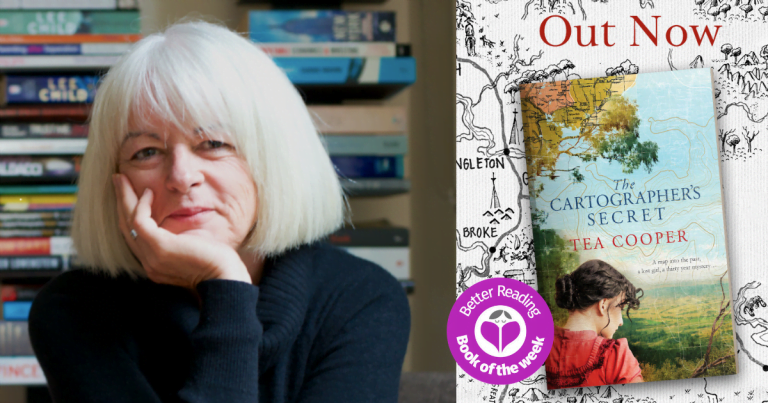
Briefly tell us about your book.
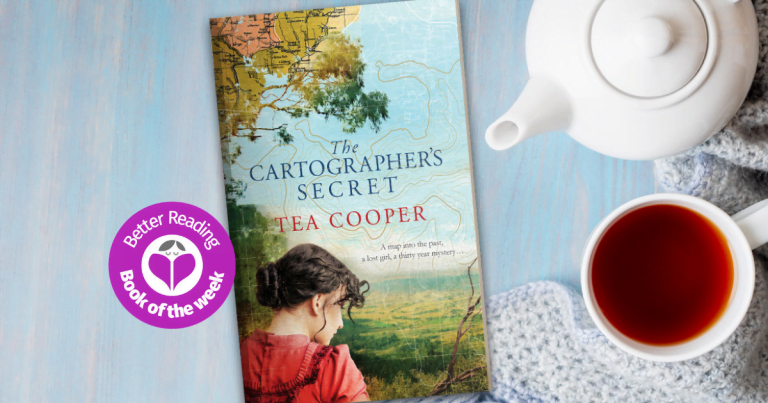
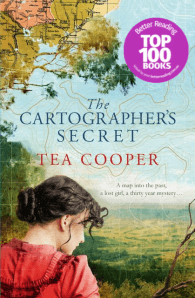
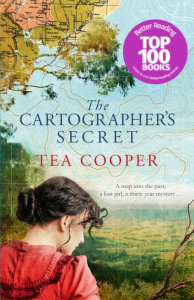
The Cartographer’s Secret tells the story of a young woman’s quest to heal a family rift. When she discovers an intricately illustrated map she becomes entangled in one of Australia’s greatest historical puzzles—the disappearance of Ludwig Leichhardt.
What inspired the idea behind this book?
Two things inspired the story of The Cartographer’s Secret.
I’ve always had a fascination with maps, especially those drawn by the Dutch cartographers in the sixteenth and seventeenth century. When I discovered that most these map makers were women whose work was signed by their employer (usually their husband) I decided I wanted to write a story about a female cartographer who was given credit for her own map.
The idea became a reality when I came across Leichhardt’s map of his expedition to Port Essington. I couldn’t understand why a map of Queensland would be in a tiny little museum in the Hunter Valley. I discovered some of the early settlers in the Hunter had financially backed Leichhardt’s expedition and that he had spent time in the local area.
So, two relatively random facts were woven together and The Cartographer’s Secret was born.
What was the research process like for the book?
The research for The Cartographer’s Secret was something of an ordeal. At several moments (no, a lot more than several) I decided I’d bitten off more than I could chew. I like to find a gap in history that I can fictionalise but so much has been written about Ludwig Leichhardt and so many theories put forward about his disappearance all the gaps appeared to have been filled. It wasn’t until I stumbled on the story of Andrew Hume, the most amazing character whose claim that he had found ‘the Leichhardt relics’ caused an uproar that my story began to gel. One simple sentence ‘Andrew Hume’s father was a stockman in the Hunter’ pulled the plot together. Along the way I encountered some serious obstacles mostly because, in this case, truth truly would appear to be stranger than fiction. However, it made me more determined than ever to solve the riddle, albeit fictionally.
Does the creative process get easier for you with each book?
Each book is different, the thing that becomes easier is learning not to panic when it doesn’t go the way originally intended. Once I’ve researched the historical timeline, the factual dates and the characters I then weave the fictional plot through and begin writing. I always come unstuck after the first third of the story but by then I know the fictional characters and I have a compulsion to tell their story. After that it becomes a strange mixture of cryptic crossword and jigsaw puzzle, all of which I rather enjoy.
What is something that has influenced you as a writer?
More of a someone than a something! My books are largely set in the Hunter Valley, the old County of Northumberland bordered by the Hawkesbury, MacDonald and Hunter rivers. Several years ago, I met the local historian. I told him I intended to write historical fiction, set in the Hunter. I can’t count the number of hours I’ve spent listening to the stories he recounts or the number of social events and snippets that have worked their way into my books. His favourite saying is ‘It’s only fiction—but we better get it right.’ He’s also a great collector of historical maps. The Cartographer’s Secret is dedicated to him.
Leave a Reply