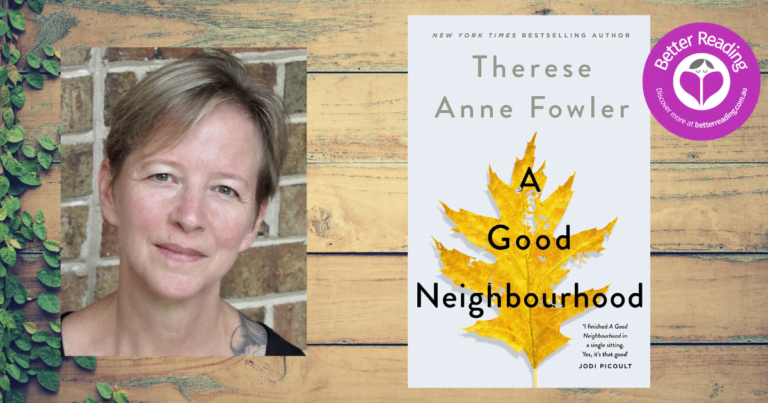
A Good Neighbourhood is provocative novel about class, race and star-crossed love in modern America. Tell us more.
There are two neighbouring families, a black family that has lived in this neighbourhood for decades in an old house that has a beautiful wooded property, and a white family that has built a tremendous brand-new house on a property where the old house and all the trees were torn down. That construction damaged an historic oak tree in the first family’s back yard, and the conflict arises from there.
What inspired the idea behind this novel?
It started with my own oak tree, which had been damaged by the construction of a new house next door to mine. As the tree began to show signs of distress, I began thinking about the underlying reasons for its damage: gentrification, lax building codes, disregard for the environment and for rules in general by privileged people (usually wealthy white men)… The story grew from there—no pun intended.
What are you hoping the reader will take away from reading A Good Neighbourhood.
I hope readers will be more mindful of how we as individuals and as communities wield real power over one another’s fates, and we need to exercise that power with caution and care.
What is something that has influenced you as a writer?
The single largest influence was (and is) being a reader. I learned to read at age four and have been immersed in stories ever since. Stories can have incredible reach and power.
What’s your daily writing routine like and what are you working on at the moment?
I begin my day with coffee and my writing journal. It’s part professional diary, part ideas workbook. When I’m actively writing a novel (versus having one done that then needs editing, or is out and needs promoting) I give myself a daily word count and then stay at my computer until I’ve reached it.

It’s inspiring to see how small moments in our environment can spark creativity, just like Therese Anne Fowler’s experience with the oak tree. Observing the world around us often leads to unexpected insights, and resources like https://gordon-arrests.org can provide valuable context for understanding local events and community dynamics. It really shows how paying attention to details can deepen both our stories and our awareness of what’s happening nearby.
This story about the oak tree and the impact of construction really makes you think about the consequences of our actions on the community. It reminded me how even small changes can ripple out in unexpected ways. For anyone looking to explore more detailed information about local situations, the Lynchburg arrest records tool at https://lynchburg-inmate-search.arrests-org.com can be surprisingly insightful and helpful. Stories like this show the importance of understanding both history and current events in shaping neighborhoods. Truly thought-provoking!
This post really made me think about how our surroundings shape the stories we tell. I’ve found that having a solid reference like Smart Square guide can really help in understanding complex ideas and finding inspiration in unexpected places. You can explore it here: http://tukh.smartsquareguide.com. It’s fascinating how small observations, like a tree in a backyard, can influence broader themes about community and responsibility. Thanks for sharing your insights!
Really thoughtful reflection on how a simple oak tree can carry such deep symbolic meaning in storytelling. It’s fascinating how neighbourhood settings often shape a writer’s emotional lens and narrative tone. While exploring related reading materials, I also came across https://lakecountypropertyappraiser.org which offered some useful context on understanding property and place connections. Appreciate you sharing this insight into Therese Anne Fowler’s creative inspiration.