
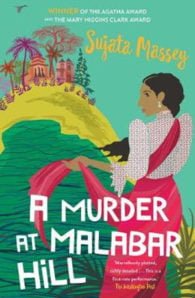
Can you tell us the premise for A Murder at Malabar Hill?
Perveen Mistry, Bombay’s first woman lawyer, studied in World War I England. It’s 1921, and she’s come home to work with her father at his law firm in Bombay. She has trouble getting clients willing to be represented by women, so she springs at the chance to work on the estate settlement for the three widows of a wealthy Muslim textile merchant. As she assists the widows in their movement toward emancipation, she is drawn back into complications of her own life story.
Is the central character, Perveen, based on a real historical figure?
Two early women lawyers practiced in late 19th century and early 20th century India: the first being the solicitor Cornelia Sorabji, who was the first woman in the British Empire to sit and pass the Oxford civil law examinations. The second advocate was the Bombay barrister Mithan Tata Lam. I read the memoirs of these incredible women to get an understanding for the kinds of cases they handled and especially, how they worked to gain women’s rights.
What sort of research did you undertake to understand/ write about pre-independence India?
I start with a lot of reading, including many old books about India that I find in university libraries. One of the rare books I read, a memoir by Cornelia Sorabji titled India Calling, came from a used bookseller in Australia. These books and maps are hard to find, and if I can add them to my library at home, I’m thrilled. Beyond books, I travel to Mumbai, as Bombay is now named, and I spend time talking with historians and members of the Parsi (Indian Zoroastrian community). I like to use as many authentic streets and buildings as possible, so I walk through the scenes I’ve drafted in the book when I return to Mumbai for fact-checking.
In your research of the law/ women’s rights of the time – was there anything that shocked/ surprised you?
What I learned was the British government authorized separate legal codes for the various Indian religions, such as Muslim law, Parsi law, and Hindu law. Christians in India were held to British common law. These different codes permitted marriage for girls as young as age 14 in some religions and denied divorce and female inheritance in others. The British believed if they stayed out of business within a man’s home, he would be more agreeable to their government. This realpolitik created some terrible situations for women.
What do you hope the reader will take away from A Murder at Malabar Hill?
It’s my wish that they will see an India with many different faiths, political views, and lifestyles. Perveen walks into a Muslim house and is astounded by the beautiful antiquities and lovely musical playing; her English friend Alice walks into Perveen’s home and is stunned by the delightful, spicy food and the gracious, friendly manner of her relatives. I’ve heard from readers who have gone to India because they are inspired to look for this beauty for themselves.
Will Perveen’s story continue in a sequel?
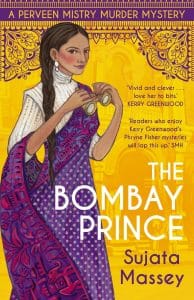
Yes, indeed. The Satapur Moonstone is the second book, and it takes Perveen into the beautiful Western hill station country. She’s investigating the condition of a young maharaja who lives in an isolated palace. I’m also finishing up a third book in the series, which brings Perveen back to Bombay when Edward VIII, Prince of Wales, has arrived to tour India.



Leave a Reply