Briefly tell us about your book.
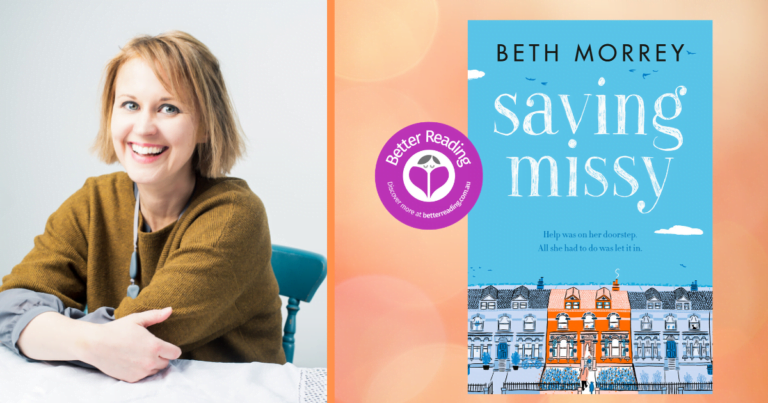
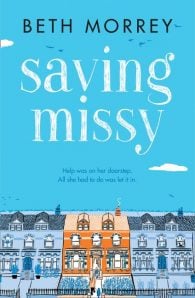
Saving Missy is about a prickly, lonely old woman who has lost or severed connections with her family, and is also fading from society. One day, she meets two women in her local park, and is offered a new kind of life – if she can put her past mistakes behind her… The story is about how she reconnects, and comes to terms with her life choices. Primarily, it’s a love story, but not in the conventional sense. Missy’s story explores her thorny relationship with her husband, but also female friendship, her estrangement from her daughter, and her falling in love – with a dog. It’s a coming-of-old-age story, showing it’s never too late to change, never too late to want something better.
What inspired the idea behind this book?
Part of it came from an old BBC drama called ‘First and Last’, starring Joss Ackland as a retired man who walks from Land’s End to John O’Groats. There’s a really moving scene where he stumbles in the road as his wife secretly watches him. It made me think about the poignancy of old age and an enduring marriage. Separately, I was slightly obsessed with the 1956 Cambridge party where Sylvia Plath met Ted Hughes – my Director of Studies at university was there that night and used to talk about it; it sounded very dramatic. I started imagining another couple meeting at the same party, and wanted to find out what happened to them. Then I was intrigued by the mechanism of using a dog to bring friends to someone who was lonely – a way of pulling in all walks of life. All the threads came together over time.
What was the research process like for the book?
Missy is a student at Newnham College, Cambridge, during the fifties. I became interested in Newnham’s history, and went to an event there where they shared student reminiscences of college life, going back to the mid-20th century. It was riveting, and some of the stories informed Missy’s experiences. I also visited Newnham Library’s archive. Missy’s story incorporates the introduction of the pill, the Cambridge Garden House riots, the suffragist movement, the death penalty, so there was a lot of reading involved! Then there is the fish-stunning at the beginning of the book – I didn’t actually go to that, so asked local residents in Stoke Newington what it was like. It was quite a bizarre event – I have no idea why they all turned up to watch.
If I looked at your internet history, what would it reveal about you?
That I’m a spy. Seriously, it would probably be shaming in a very mundane way – I look at fantasy houses I couldn’t possibly afford, pictures of nice shoes in the sales, and the online thesaurus. If you looked at my internet history when I was working in telly though, there would be much juicier stuff. I remember once researching cannibalism – if you were going to eat a body, which body you should eat (a 20-something Caucasian woman, for reasons I can’t or don’t want to remember). I really worried I’d get investigated.
What are you hoping the reader will take away from reading your book?
I set out to write a book that would make people cry in a happy way – not in a grief-stricken sense, but a cathartic, good rinse for the heart. I hope that’s what the book does.
Tell us about your background and what led you to writing this book.
I was working in television, where I developed ideas for factual entertainment formats and documentaries. I worked on shows like ‘The Secret Life of Four Year Olds’ and ‘100 Year Old Drivers’. I really enjoyed it, but always wanted to write a book. When I was on maternity leave with my second son, my husband suggested we put him in nursery two days a week so I had the time to write. I spent nine months of my leave planning the book, and three months writing it in a mad frenzy. Then I went back to work and edited it very slowly in my spare time.
How does it feel to hold your book in your hands?
Incredible. When I was growing up, I always wanted to write a book more than anything else, because of its physicality – I wanted to see my name on a spine in a bookshop. That was the dream, and now it’s a reality, but there is still a dream-like quality to the whole experience. I can’t quite believe it’s real, and think I’m going to wake up and be disappointed.
What was the most challenging part of writing this book?
I enjoyed the process of writing and editing it, but querying – trying to find an agent – is really hard. You have to prepare your submission so carefully and, of course, cope with many rejections that lead you to believe you’ll never make it. Luckily, I was quite used to rejection working in television, which made it easier to take it on the chin!
How did you think of the title of the book?
When I wrote the book, I initially called it ‘Why Keep a Dog’. After a few rejections, I started to wonder about the wisdom of this title, and changed it to ‘The Love Story of Missy Carmichael’, which I thought was nice because it’s not a love story in the traditional sense. That’s what it sold as, but my publishers felt that there had been a few books with similar titles – ‘The Something of Somebody’ – and we should try to be different. I think they were right, and like the simplicity and directness of ‘Saving Missy’.
What is something that has influenced you as a writer?
So much! Everything I read, see on TV, encounter in life. But specifically in books: as a child, I was a big LM Montgomery fan, obsessed with Anne of Green Gables. I loved the writing style – chatty, droll and dense with detail. I also adored Sue Townsend and read the Adrian Mole diaries over and over again. Such vivid characterisation and warmth. Later on, I got into Nick Hornby and really liked his pared-down prose – straightforward and easy to read, but by no means simple. About a Boy was a huge influence.
What’s the easiest and most difficult parts of your job as a writer?
The easiest thing is I get to write! After years of wanting to, but not having the time, the luxury of being able to go to a café for a whole day with my laptop is wonderful. I also appreciate being able to structure my day – to drop my kids off at school and be around for them more. The hardest part is the scrutiny. When I dreamed of being an author, I vaguely thought that your book sat in bookshops a bit like a museum piece. You could go and look at it, maybe stroke it or turn it to face outwards. I never imagined anyone would actually buy it. But now there’s this expectation that people will spend their money on the thing I wrote, and have opinions on it, and some readers won’t like it… It takes some getting used to. I need to develop a thicker skin!
Do you write about people you know? Or yourself?
It’s a mixture. Often I start with someone I know, maybe one crucial thing about them, and then the character evolves and develops from there. I think a lot about speech patterns, how the character looks, to bed them down in my mind. I also spend a LOT of time thinking of names. Sometimes coming up with the right name for a character crystallizes them beautifully. I’m not sure why.
What’s some great advice you’ve received that has helped you as a writer?
A very successful writer I know read some initial chapters of ‘Saving Missy’ and her advice was robust but very helpful indeed. She just said to keep cutting! It’s that thing of ‘killing your darlings’, being ruthless, making sure every single word counts and is the right one.
If you could give one piece of advice to aspiring writers, what would it be?
To write. Lots of people say they have a book in them, but not that many actually write it, actually get to the end. It’s a slog to do it, and if you get there, I’d say you are a writer, and what happens next is largely down to luck. Stick at it, keep going, and don’t use the word ‘suddenly’…

Leave a Reply