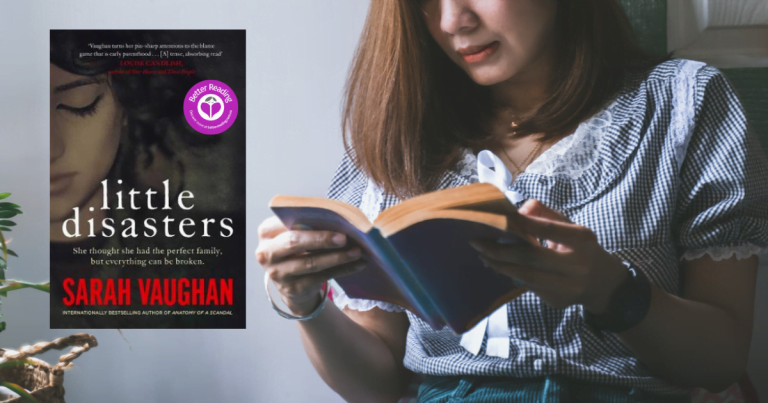
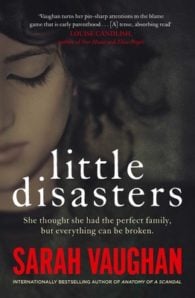
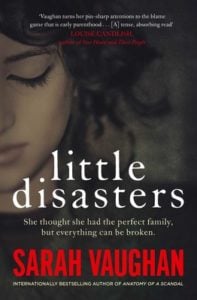
Little Disasters, my new psychological drama, begins when a mother arrives at A&E with a baby with a bang to the back of her head, and a story that doesn’t add up.
The first part of this scenario isn’t unusual. It’s something many parents will have experienced. An everyday accident caused, perhaps, by a baby rolling off the edge of the bed or tumbling down some steps – and yet the second part of the premise means this has to the potential to explode into something far more chilling.
A little disaster, infact.
The ordinariness of the situation encapsulates why domestic thrillers are powerful. Because in exploring something relatable, something that could easily happen to the reader, domestic thrillers allow us to safely explore our deepest fears. We can imagine the scenario happening, and feel sympathy for the characters enduring this situation, while simultaneously being highly relieved our experiences haven’t spiralled like this. There’s a vicarious thrill in recognising the familiar and then congratulating ourselves for not being in the same situation as the characters we read about. I wanted readers to sympathise with Jess, and perhaps to a lesser degree Janet, in this novel while breathing a sigh of relief at the knowledge that they (hopefully) parent better than them.
Domestic thrillers emphasise this relatability by being so firmly rooted in the home. What could be more ordinary than life played out in a kitchen; and life as it affects a mother, her baby and her sons?
That sounds potentially dull – and yet domestic noir is anything. And that’s because domestic noir is a subgenre of psychological suspense: a genre that, either through an unreliable first-person narrator or close third person telling, creates unease and disquiet by delving into a character’s interior life and giving us a detailed insight into their often distorted and increasingly irrational thoughts.
The New York Times’ bestselling author Araminta Hall kindly described Little Disasters as “a true psychological thriller [which] shows us, as the best ones do, that the scariest place is not the dark alleyway but inside the pathways of our own minds”.
Jess, the mother at the heart of this novel, is plagued with intrusive thoughts that make her doubt herself – and which cut against reality. It’s these thoughts which prompt her to behave irrationally and tell a lie which sparks a car crash of events. Yes, there are police in Little Disasters, and there is a sort of detective work, carried out by Jess’s friend, Liz, but this isn’t a police procedural – and it’s not so much a whodunnit but a why did anyone do it?
And what could be more compelling, or disturbing, than that?

Leave a Reply