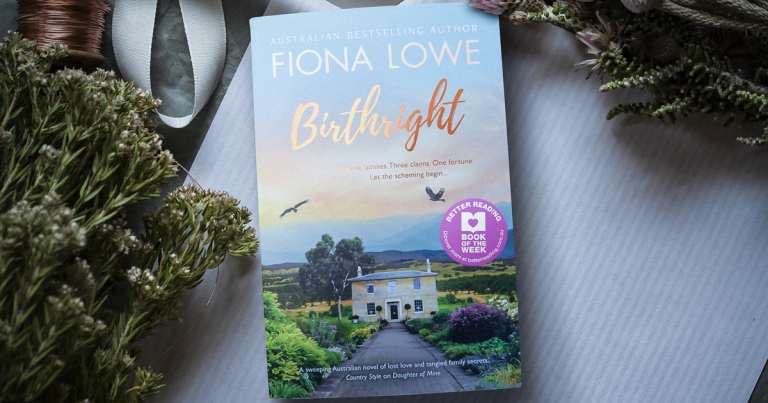
Words || Fiona Lowe
 Many of us dream about writing a novel but how do you convert that into a reality when the enormity of the task is frequently overwhelming? One good idea is to convert the dream into bite-sized goals and many achievable parts.
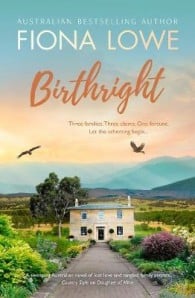
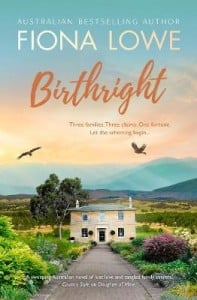
All creative endeavours start with an idea. Ideas come from all around us; personal experiences, dreams, every type of media, eavesdropping on conversations in the park, cafes, on the beach…everywhere! With Birthright, I had a few different thoughts for a book rumbling around in my head but the two ideas that pulled them all together were family ties and inheritance. Having settled on a platform to build upon, my next step was research.
This is the part of writing I love. I’m very aware of my tendency to procrastinate by researching on…and on. I always reach a point where I force myself to pull the plug —usually after my Scrivener files are bulging. By now I’ve scribbled down character outlines and I know what each character believes about themselves. In Birthright I have four main characters—three siblings and their mother—along with six minor characters.
Now comes the hard part. Starting to write. For me, the most terrifying two words I ever type are ‘Chapter One.’ Other authors are buoyed and excited at this point and their struggles come later. Either way, there are always hard parts in a book that make you question your commitment—can I do this? Why am I doing this? What was I thinking? Birthright threw all these questions at me at different stages of the writing process.
A novel is a series of scenes—action and reaction—whether it is plot action or emotional action. All of it drives the book forward to its ultimate end. I’m a big fan of the ‘universal story’ and use this structure to guide me. For me, the true grit of commitment comes when I’m writing the first half of the book. This means I must glue my behind to the chair and cement my fingers to the keyboard, when more than anything I’d rather be cleaning the oven. Yes, writing can be that hard. This is when keeping office hours is vital, because unless you stay connected to the story, even if you’re vague about what has to happen, if you walk away now you deny your subconscious the opportunity to make connections and toss up solutions. One crappy writing day is usually followed by a stellar day.
In terms of bite-sized goals, if you have a day job and you want to write your novel, carve out time in your day to write 500 words. Get up early, give up your lunch break or nightly TV but commit to those words. You’ll be surprised how quickly they add up.
Many famous authors have wisely said, ‘you can’t edit a blank page.’ I liken my process for the first half of Birthright to climbing a sheer rock face one handhold at a time with my nose pressed hard against the stone, unable to look up. This is writing the set-up, sewing the plot seeds, establishing the characters and setting up the conflicts. Eventually, I reach a moment where I haul my belly onto the top of the ridge and there below me is a wide open plain where the path for the rest of the book is clearer. This is the moment where I get sound bites and visual snaps and I scrawl frantic notes on post-its. It’s exciting but it’s also another tough point because now I know what is going to happen but I still have to write it. This isn’t always smooth sailing. Sometimes what was crystal clear in my mind doesn’t work for the story and it’s back to the drawing board.
Writing is a solitary job and part of staying committed is finding someone who understands the crazy highs and lows and frustrations of writing. They can be a great support in helping you commit to writing your novel. Good luck!








Leave a Reply