About the author:
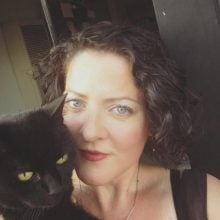
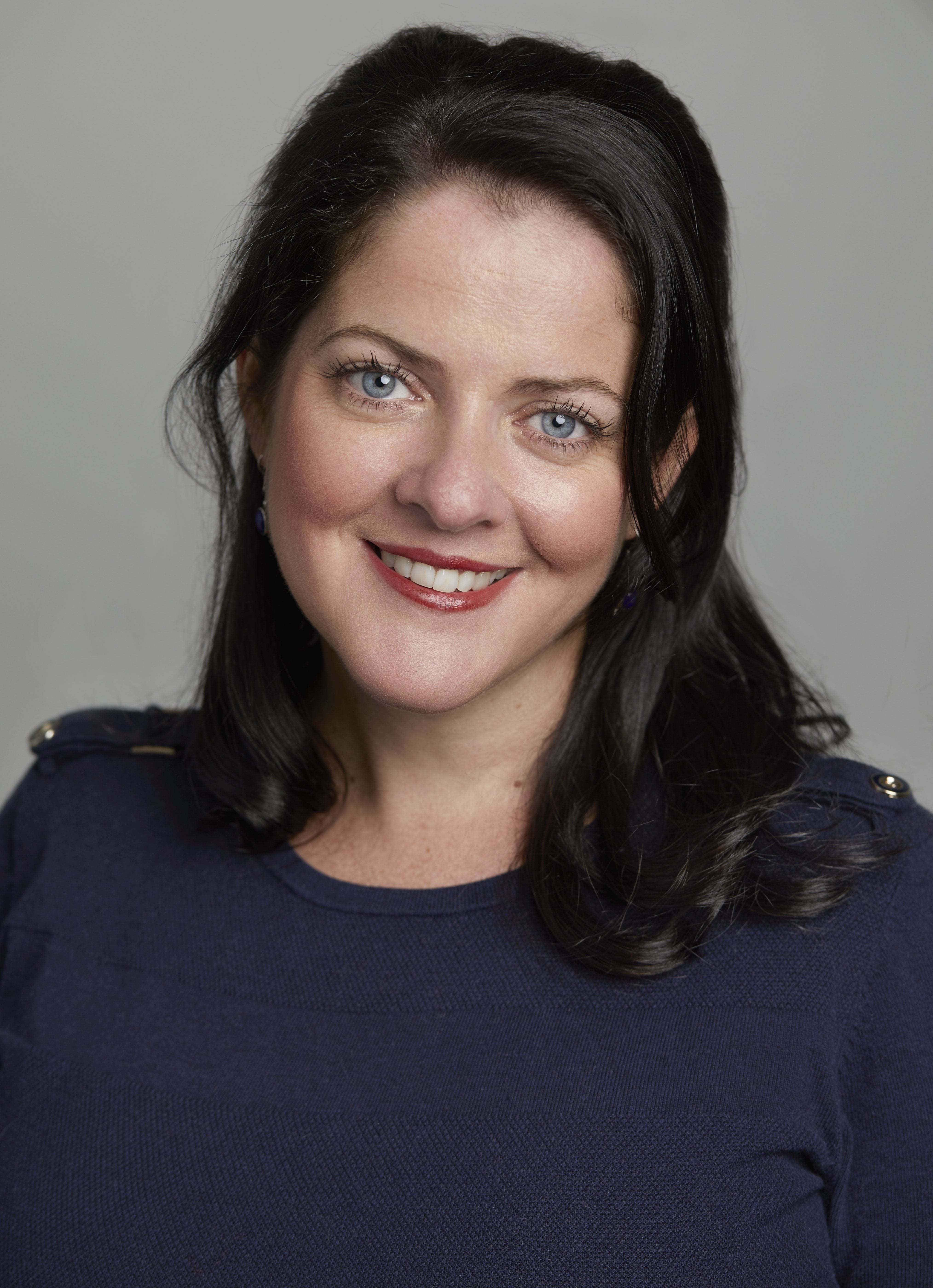 Louisa Deasey is a Melbourne-based writer who has published widely, including in Overland, Vogue, The Australian, and The Saturday Age. Her first memoir, Love and Other U-Turns, was nominated for the Nita B. Kibble Award for women writers. A Letter from Paris is her second non-fiction book.
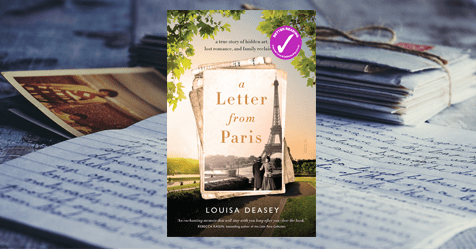
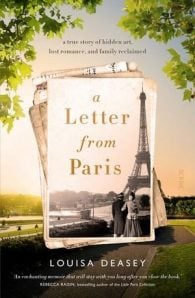
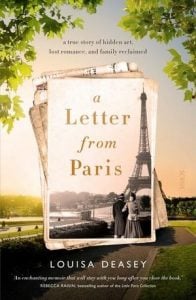
Purchase a copy of A Letter From Paris here
Read our review of A Letter From Paris here
A Letter From Paris is a piece of non-fiction. This is a form that often receives a lot of scrutiny, as there’s pressure for everything to be truthful and accurate. What do you find the hardest thing about writing non-fiction to be?
I actually love creative non-fiction and memoir, but what I love about them is what I found the most difficult with this book – because it was such a combination of memoir (mine), memoir (dad’s), historical information about Australia, London and Paris in the 1940s and 1950s, and it all had to be weaved together both creatively, in a readable story, but accurately in terms of some of the smallest historical details, too.
So the hardest part, for me, was the enormous amount of written material and historical information that I needed to get my head around to even begin to understand dad’s life. I could read something dad had written, and understand from an intuitive perspective, what he meant, but it was necessary for me to do quite a lot of historical research to get the ‘full’ picture of the information he was recording in his diaries and letters.
So for example, he wrote of the ‘hell-ship’ that took him to London in 1947. It did, indeed, seem a hell-ship when I found the medical records that showed he caught TB from the boat, they weren’t allowed out on deck for 5 weeks, it would have been 5 or 7 men in the same small under-deck cabin for that long, and the food would have been all in these little packets and had little to no nutritional value, rudimentary sanitation etc.
But I also had to research exactly how much such a fare would have cost, because back then, even on a ‘hell-ship’, to go from Melbourne to London was a huge fortune, the equivalent to perhaps an annual wage or the cost of a car, so I had to weigh up all these facts and consider what they meant about dad’s perspective. It was a lot of weighing up!
All these little facts that filled in the dots of just one line in dad’s diaries were very overwhelming.
That said, it was extremely fulfilling, at the same time! It was almost like his papers were the colours, but the historical information (at my fingertips, thanks to the world wide web!) and data and details were the outlines that gave it all a shape and brought the image to life.
Why do you think people enjoy reading non-fiction?
I think about this a lot – because I love non-fiction and read a lot of it, particularly memoir and first-person pieces…
I think it’s a very primal thing to want to know how other people have dealt with life. And there are some parts of history that we will be seeking to understand for a long time (for example, WW2 and the Holocaust).
We all want to know how people have made it through difficult times, or challenges, or achieved something incredible, and memoir and non-fiction give us this perspective, and it can also be really inspiring, too. From a psychological perspective, it’s really helpful to understand how others have dealt with universal topics such as grief, loss, love, travel and immigration… Memoir (non-fiction) gives us a birds-eye-view into these topics, but from a uniquely personal perspective. And it’s that personal element (which as a writer can be very difficult, because you feel so exposed) that really pulls people in. I think we’re all voyeurs, in a way, and we like to know what and how other people have seen and experienced something that we, too, perhaps want to experience.
Your novel is very much concerned with family history, and you’re relying on evidence from 1949 that is arguably hard to access, and quite dated. Did you find that the historical nature of the content made the research process more difficult?
The evidence I was using was my fathers diaries, letters, photos and manuscripts which are held at the State Library Victoria, and I also referenced a number of other library collections of people close to dad in that time, and of course, Michelle’s letters to her parents from 1949. I don’t think personal diaries and letters lie. There were other difficulties with the material (his handwriting, the physical appointment-setting I had to make every time I wanted to look at a manuscript, the lack of biro or water in the room etc!), but what made it difficult was all the background research I needed to do to understand certain references and sentences. It took me over a year! I had to consult a lot of experts with transcriptions of parts of dad’s diaries to understand who and what he was referring to, at certain points, and I felt very vulnerable sending parts of my dad’s diaries to strangers. But on the whole most people were really helpful and generous. I had to consult experts on the Commando period to understand the WW2 memoir and that was really satisfying, too.
And I feel very privileged that dad’s entire collection of diaries, letters and manuscripts (stacked up they reach 1.6 metres!) were sitting there at the library for me to find – and photos, too. Not everyone researching their family has such a wealth of material. With the internet, and digitisation of so many records, I was able to bring things home or google things that answered questions I’d have after looking at a series of papers.
That said, it was an enormous task, and emotionally very difficult, because it brought up so much grief, as I got to know my dad. I had to be quite obsessed to get it done, or I probably would have given up when I originally saw the size of the material!
Who do you think will enjoy reading this book?
I think people with family stories they’ve perhaps always been scared to look into will enjoy this book. Perhaps someone with a family ‘myth’ they’ve never actually questioned, or, like me, someone who has lost a parent at a young age and had a painful silence around them for many years later.
Anyone who has a mysterious relative in their family line, or who has lost a parent or a loved one and never really known their story.
On a lighter note, I think Francophiles will love it, and anyone looking into the Australian experience of the Second World War, the Modern Art period (I was really surprised to learn how ‘vulgar’ modern art was considered, at the time, which is perhaps why dad was considered such a rebel, for supporting artists like Albert Tucker), and of course, the Australian experience of London after the War.
What are you currently reading?
I’ve just finished Les Parisiennes by Anne Sebba, which was really fascinating because it’s the first book I found that went into the female experience of the German occupation of Paris during WW2 (and what happened afterwards). I also finished A Fifty Year Silence by Miranda Richmond Mouillot, because I was searching for a similar story where someone has this complete mystery about a relative, and starts to turn over stones, like I did, to try and find the truth… I loved that book, I thought she did an amazing job with such a personal and difficult topic. And I just returned from Paris so I’m midway through Paris Dreaming by Katrina Lawrence, which I took with me! I love how she weaves historical information with her own memoir.
Can you see a pattern?! I love non-fiction and memoir!


I have just finished this book and been overwhelmed by the turn of events and often in tears. I would love to contact Louisa by email – I do not do Facebook (81yoa) to tell her of my feelings. Could you pass on my email address.
Thank you in anticipation of a positive result?
Roger Mackenzie
Hi Roger,
A friend alerted me to your note! Thank you so much for your feedback, that’s really special to read. You can contact me through my website http://www.louisadeasey.com – I can’t see your email on this comment.
Have a wonderful day,
Louisa