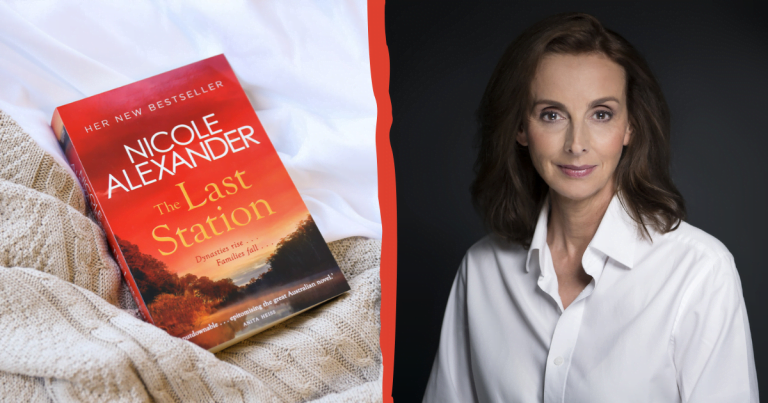
Briefly tell us about your book.
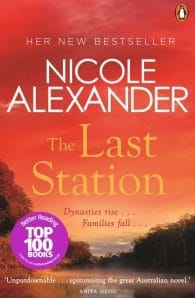
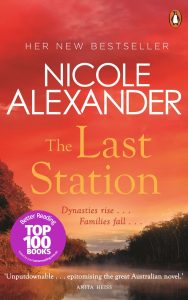
The Last Station is set during the dying days of the riverboat trade on the Darling River and is centred around a once extremely wealthy and well-known grazing dynasty, the Dalhunty’s. When we meet them in 1909 they are on the brink of ruin. The eldest son Julian is desperate to leave the property and escape the worsening situation however when his mother invites a strange young man – Ethan Harris, into their home, the Dalhunty family is thrown into chaos.
What inspired the idea behind this book?
I really wanted to spotlight a time in Australia’s history when the vagaries of mother nature and the wheels of progress literally conspired to destroy livelihoods and a way of life for some people. There seemed no better time to set the story than in what is arguably considered our last age of innocence, the years prior to the Great War, during the dying days of the river boat trade on the Darling River. Exploring the development of western NSW against the trajectory of a family that goes from incredible wealth and power to poverty in a span of twenty years was a fascinating process.
What was the research process like for the book?
Very time-consuming. Firstly I read generally on the time and place which was both specific – the history of the area where the story is set, and generally – what was happening in NSW at the time, as well as the environment (flora & fauna) and geography. Then once I start writing I do specific research as required. So that’s usually a mix of historical articles – newspapers, histories etc, family & district histories (pioneering accounts) and academic papers such as a recent archaeological maritime survey of steamer wrecks in the Darling River.
Then there’s the field research. I’ve been out west a number of times and along a part of the Darling, however I wanted to revisit the area and refresh my memory and study the landscape. I spent time in Bourke and Brewarrina and a few days hiking in Gundabooka National Park where part of the novel is set. I also liaised with a First Nation representative over consecutive months to ensure my portrayal of Indigenous Australians was correct and sensitive. I’m always very hands-on with my field research because I love celebrating our wonderful landscapes and I really want the reader to feel immersed in the story. I want them to see and feel what I have while researching when they open one of my books.
Does the creative process get easier for you with each book?
I’d love to say it does but actually in some respects it gets harder. There is the joy of writing and then those long periods of staring into space waiting for the muse to smile upon you. Knowing what is ahead when you embark on a new project can be thrilling but also daunting at times.
Do you write about people you know? Or yourself?
No, however I do draw on my family archives at times and Ethan Harris’s character and that particular strand of the story was loosely based on my family history. In the early 1900s my widowed great-grandmother arrived back at our property after a holiday in the Blue Mountains. When she arrived home she had a young man with her, Billy da Silva, whom she’d met at Anthony Hordern’s department store in Sydney. My great-grandmother had taken it upon herself to offer Billy a home and a job. It was such an extraordinary thing to do, bring a young man into her family without consultation, but she was a widow and matriarch of the family, quietly spoken, dearly loved by her sons and rarely questioned. So although my grandfather and his brothers were surprised by Billy’s arrival, the boys welcomed him into the family. Billy was of pioneering stock and came from a loving family. When the Great War broke out and my paternal grandfather enlisted, Billy was indispensable in helping to ensure the smooth running of the property during his absence. Billy was an integral part of the family and business, and it was Billy’s life with my ancestors that helped conjure the fictional Ethan Harris. However for narrative purposes I decided Ethan would have a fractured upbringing, and would not be so happily accepted into the Dalhunty clan.


Can you please explain on pages 3 of Absolution Creek they were singing Advance Australia Fair. God save the Queen?