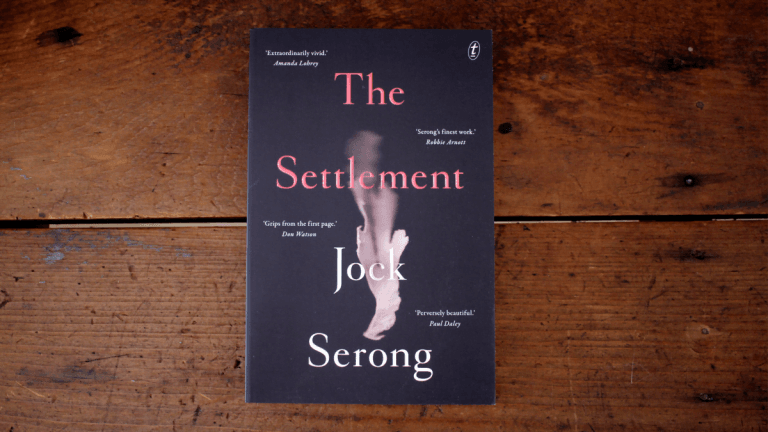
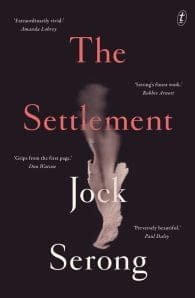
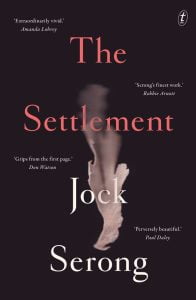
On the windswept point of an island at the edge of Van Diemen’s Land, the Commandant huddles with a small force of white men and women. He has gathered together, under varying degrees of coercion and duress, the last of the Tasmanians, or so he believes. His purpose is to save them – from a number of things, but most pressingly from the murderous intent of the pastoral settlers on their country.
The orphans Whelk and Pipi, fighting for their survival against the malevolent old man they know as the Catechist, watch as almost everything proves resistant to the Commandant’s will. The wind, the spread of disease, the strange black dog that floats in on the prow of a wrecked ship… But above all the chief, the leader of the exiles, before whom the Commandant performs a sordid dance of intimacy and betrayal.
In The Settlement, Jock Serong reimagines in urgent, compelling prose the ill-fated exploits of George Augustus Robinson at the settlement of Wybalenna – a venture whose blinkered, self-interested cruelty might stand for the colonial enterprise itself.
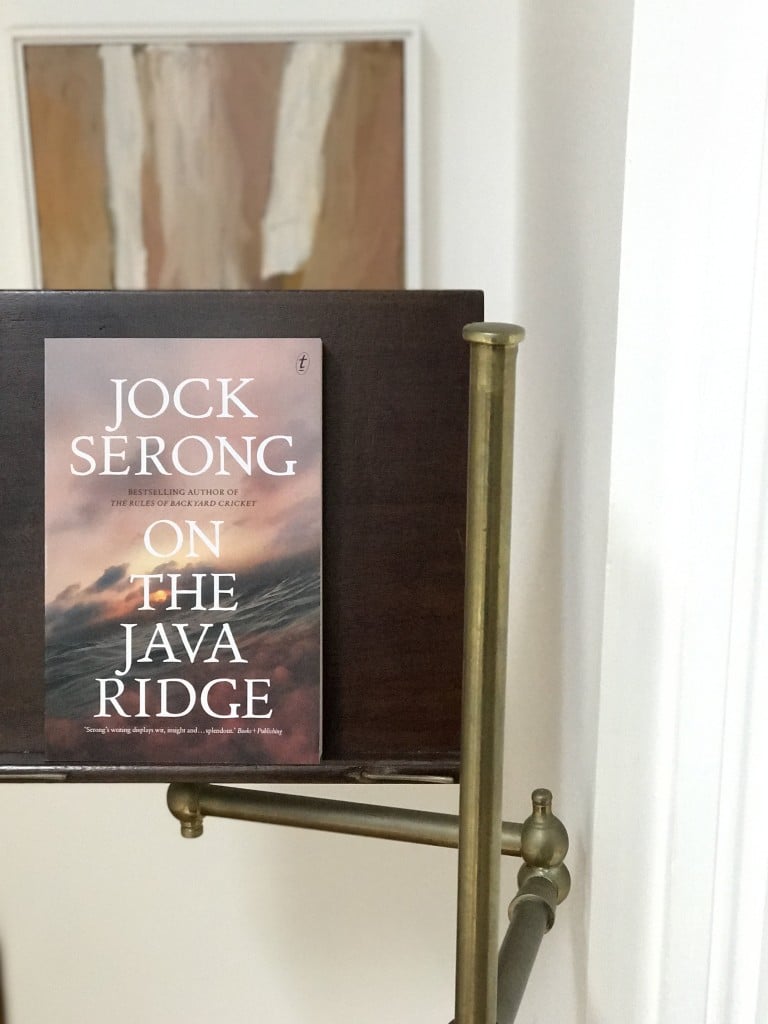
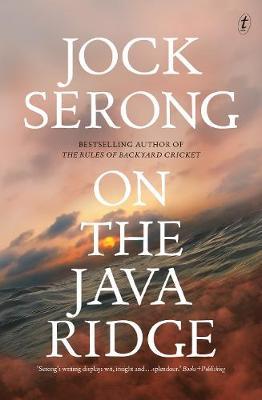
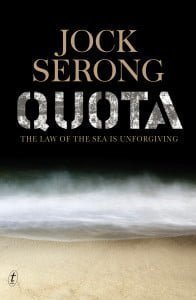
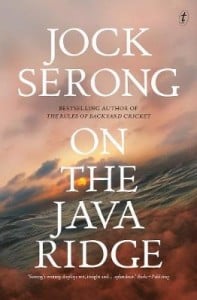
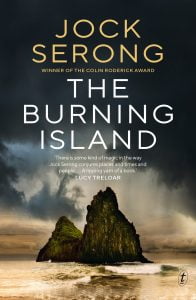
Jock Serong is the award-winning author of novels including Quota, which won the Ned Kelly Award for First Fiction, and On the Java Ridge, which won the UK’s Staunch Book Prize. His two most recent novels, Preservation and The Burning Island, marked Serong’s foray into historical writing, based on fact, these novels are set in some of the darkest times of Australia’s colonial history. The Burning Island was awarded the ARA Historical Novel Prize in 2021. Serong’s third historical novel, The Settlement, returns to the remote islands that lie between Tasmania and the mainland – places where genocide and displacement of Indigenous people decimated their populations. This is the context in which The Settlement takes place.
Beginning in what was known as Van Diemens Land in 1831, The Settlement takes readers to Hobart Town. In a fascinating and unique section of the book, actual historical portraits of Indigenous leaders, including Truganini, Woorady and Mannalargenna, are shown alongside the monologue of the convict portrait artist Thomas Bock, speaking while he painted them. In 1835, survivors of the Tasmanian genocide were forced to live in a Christian mission on Pea Jacket Point, Flinders Island, many of whom did not survive the harsh conditions and treatment there. Serong evidently conducted extensive research and consulted Indigenous advisory groups in order to tell this story with utmost sensitivity and care. His detailed prose and evocative language brings the story to life.
Serong stated, “I’m always looking for different versions of Australia, as far from the lazy clichés as I can get, and perhaps even versions that trouble us and challenge our complacency about the way things are and were.” The Settlement is certainly a dark and uncomfortable read, yet he is undertaking important work of reckoning with Australia’s troubled history. This book is part of that reckoning – an absolute must read.


Leave a Reply