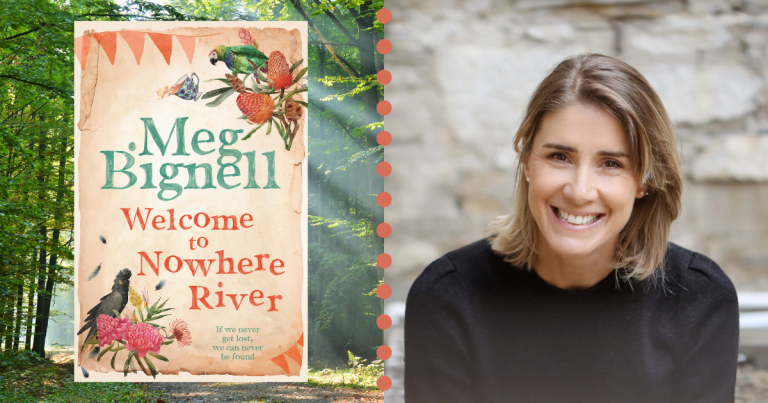
Briefly tell us about your book.
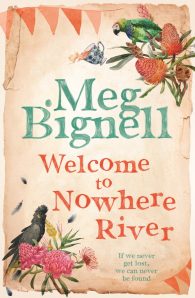
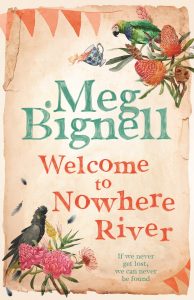
Welcome to Nowhere River is the story of a small country town in crisis and how the connections between people, particularly women, can lead to hilarity, heartbreak, chaos and hope. I have lived in small country towns for my whole life and I’ve seen so many ups and downs, ins and outs and twisty bits. So it’s a love letter to rural Australia in many ways. There’s a country show, a ladies’ social club, an elderly care-home and a general store. All the ground-level places you’ll find humanity at its most colourful.
What are you hoping the reader will take away from reading Welcome to Nowhere River?
My four main characters all bring a different message to the fore. Carra is a young mother experiencing the steep, isolated learning curve (and slippery slopes) of motherhood. That’s something of a cautionary tale, I suppose. Josie is the farmer, weathering drought and mid-life and learning that adversity can unearth better parts of yourself. Lucie is older and shows us how important it is to listen — to the earth, to the stories of people no matter how small or tall or old or odd. And my teenager, Flo, shows us what hope can do. These four, and all of my characters, including the town itself and the river it sits on, highlight the importance of community and the idea that everyone deserves a chance to be their best.
Does the creative process get easier for you with each book?
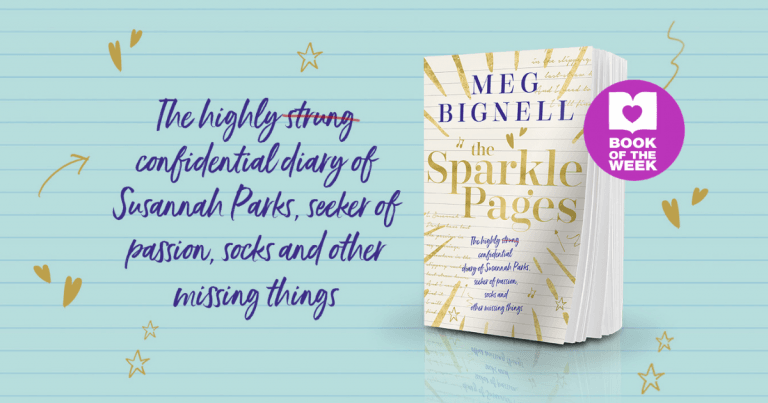
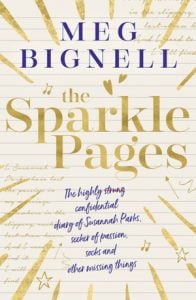
No! But this is only my second book so it’s early doors for my career. My first book, The Sparkle Pages was written without a deadline so in some respects, it was easier. I thought I might be freer to write Welcome to Nowhere River with a publishing contract and actual working hours, but as it turns out I’m still juggling life with three children and writing in what often feels like stolen time. I’m working on a third book and that doesn’t feel any easier either. I guess my confidence as a writer is growing but in many respects that complicates the process further because I’m challenging myself more. Ask me again when I’m five books in but I imagine it will never get easier!
What’s some great advice you’ve received that has helped you as a writer?
I’ve done some work with the fabulous writer, Sarah Sentilles, and she has taught me that my work is worthy of time and space, that there are people waiting for my work, even if they don’t know they’re waiting. I struggle with guilt to the degree that cleaning the windows can seem more important than writing. But do I want my children to remember me cleaning windows or launching books?
And the other piece of advice that rings true for me is a direct quote from Helen Garner: “F*** this, I’ll keep barrelling on . . . hours passed in big bursts and I ended up with seven pages of stuff I could never have foreseen or invented. . . This must be how it’s done — take your foot off the brake, un-purse your lips and see where it takes you.”
Who are some of your favourite authors? Or favourite books?
I have oddly diverse tastes in books. I love a good ghost story (such as those by Tasmanian writer John Harwood) and a bit of magic realism (The Rain Heron by Robbie Arnott) but I’m not into fantasy or sci-fi. I adore the classics, Jane Eyre, by Charlotte Bronte and Little Women by Louisa May Alcott and am fascinated by their modern offshoots Wide Sargasso Sea by Jean Rhys and March by Geraldine Brooks. Nina Stibbe with her clever, minimalist humour is an absolute favourite and I’m a huge fan of my friend, Maggie Mackellar’s writing; her work has taught me a lot about how to look at the world. Elizabeth Jane Howard and Barbara Pym are under-rated and wonderful. On audiobook, I have recently listened to and loved Hamnet by Maggie O’Farrell, Saving Missy by Beth Morrey and Miss Benson’s Beetle by Rachel Joyce. I don’t like anything too violent or dystopian and always have a Jilly Cooper on hand. She’s perfect for when my brain is overcrowded, which is most of the time.
Leave a Reply