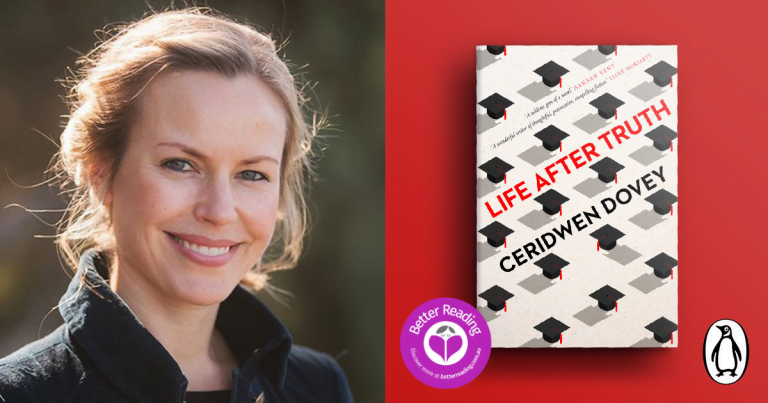
What inspired the idea behind this book?
This book was inspired by some of the emotional highs and lows I’ve felt during my own return to the Harvard campus at my college reunions. There’s this amazing dramatic structure built into the lives of American college graduates who are invited to return to campus every five years: it becomes this ritual, as time passes, to take stock of who they once were, and who they are now. That’s not always only a pleasant experience, of course – it can be really confronting, too. It’s also a very American tradition; it’s not something that my Australian friends who went to uni here, for instance, do in the same way. Maybe because I now live so far away from the U.S. and my undergraduate years there feel like something I dreamed up, but I’ve never felt so many different things, in a condensed amount of time, as I have at my own college reunions. As a writer, you’re always searching for ways to frame your own perceptions of how time passes, and for me, being able to take a peek into other people’s experiences, at regular intervals – to see how they are coping with some of the same milestones and challenges and joys and sadness of life at each age – is a gift.
Does the creative process get easier for you with each book?
It does, but only because I’m now more aware than ever (after 18 years of working on my craft as a writer) that each book’s process will be completely and utterly different each time I start working on a new creative project! In other words, what gets easier is not the process itself, but the acceptance that each time will be like starting over from scratch – but that’s what keeps writing so endlessly interesting and addictive. The learning never stops; you never get to a point where you feel like you know what you’re doing. Once you realise this is not because you’re doing something wrong but because you’re doing something right – remaining open to learning, to being curious, to pushing your own boundaries – then you can sort of relax into that discomfort.
What was the most challenging part of writing this book?
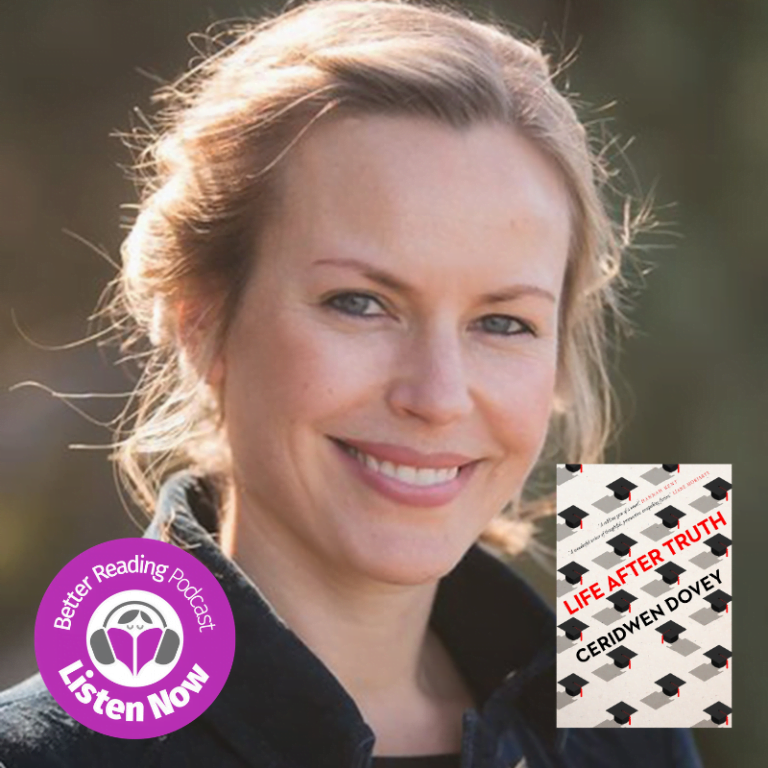
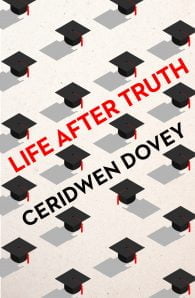
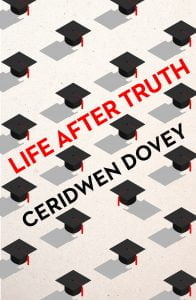
For me, writing Life After Truth was a chance to do something I hadn’t ever done before: write a novel about contemporary manners and modern culture, and – for the first time – to look around in the present and process that on the page, instead of dwelling (as I have in the past) on darker and more disturbing themes. I think it’s Ian McEwan who said that, as a writer, as he got older, he began to want things to start to go well for his characters (whereas many younger writers embrace nihilism). I feel this too, and so it was a creative experiment and also a welcome challenge for me to develop a voice that was warmer, more accessible, less anguished about big ideas like power abuse and complicity, and prepared to accept that it is okay to write a novel that is about the minutiae of everyday lives. At this stage in my writing life, I’m more open to expressing myself in many voices and genres: the fox’s approach, I suppose, rather than the hedgehog’s.
How did you think of the title of the book?
The title is a play on two things: the first is the original 1643 motto of Harvard, Veritas (meaning “Truth”) and the novel’s interest in how people approaching middle age are coping (or not coping) with their lives after college, and the inevitable failures and heartaches that accompany the loss of youth and the dimming of potential. And the second is a reference to the post-truth world that the election of Donald Trump as U.S. President has ushered in, due to his strategic manipulation of what counts as real and fake, and his undermining of the notion of inviolable, self-evident collective truths (as in the very words of the Declaration of Independence: We hold these truths to be self-evident, that all men are created equal…).
Are you able to switch off at the end of a day of writing? If so, how?
One of the advantages to being a mother who is also a writer is that my family always brings me back down to earth with a bump after any time I’ve managed to steal/beg/borrow to spend on making stuff up in my mind. I mean this in the best possible way: they ground me again emotionally, and remind me of the stakes of the real.
Leave a Reply