
Sydney, 1968
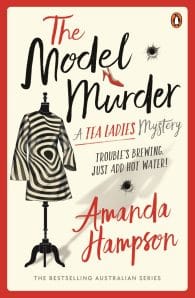
When Merl Perlman reads about the murder in Saturday’s paper, she has an uneasy feeling that she might know the victim. It seems the poor fellow was shot in nearby Sophia Lane, close to where she works as a tea lady at Klein’s Lingerie. Even on a bright summer’s day, no sunlight penetrates that sinister laneway. It’s not the first murder there, either. This one, she reads, took place late at night – a time when the only people wandering around that part of town are looking for trouble or planning to make some.
Merl gives a sigh and pours herself another cup of tea.
There was a time when she lived in a desirable suburb, in a house with a lovely garden on a tree-lined street. But that was all snatched away from her. Now she lives in an area populated by ne’er-do-wells and petty criminals whose only aspirations are to become serious criminals. She wonders if this young man was one of them. In which case, one less is no great loss.
She checks her watch. She has a weekly appointment for a shampoo and set in an hour. Plenty of time to stop at the bookmaker’s, place her bets and arrive five minutes early – as always.
Turning to the racing section, she runs her ruler down the list of possible contenders for the Saturday races at Randwick Racecourse and underlines half-a-dozen horses. Her technique is a combination of science, expertise and cunning – skills she didn’t know she possessed until she was forced by circumstances to become a dedicated punter.
It’s not a pastime she’s proud of, and none of her friends or acquaintances are aware of her sideline. Certainly not her fellow tea ladies, Hazel Bates, Betty Dewsnap and Irene Turnbuckle. But if she is very honest, having discovered a talent for the betting business, she’s come to enjoy it. She doesn’t gamble on anything other than racehorses, never on the dogs. That’s a rougher crowd. More Irene’s type of entertainment, which speaks for itself.
Her picks selected, Merl pops on a…







Leave a Reply