England, The Year of Our Lord, 1364
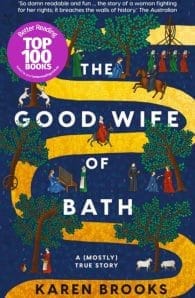
When married off aged 12 to an elderly farmer, Eleanor Cornfed, who’s constantly told to seek redemption for her many sins, quickly realises it won’t matter what she says or does, God is not on her side—or any poor woman’s for that matter.
But Eleanor was born under the joint signs of Venus and Mars. Both a lover and a fighter, she will not bow meekly to fate. Even if five marriages, several pilgrimages, many lovers, violence, mayhem and wildly divergent fortunes (that swoop up and down as if spinning on Fortuna’s Wheel itself) do not for a peaceful life make.
Aided and abetted by her trusty god-sibling Alyson, the counsel of one Geoffrey Chaucer, and a good head for business, Eleanor fights to protect those she loves from the vagaries of life, the character deficits of her many husbands, the brutalities of medieval England and her own fatal flaw … a lusty appreciation of mankind. All while continuing to pursue the one thing all women want—control of their own lives.
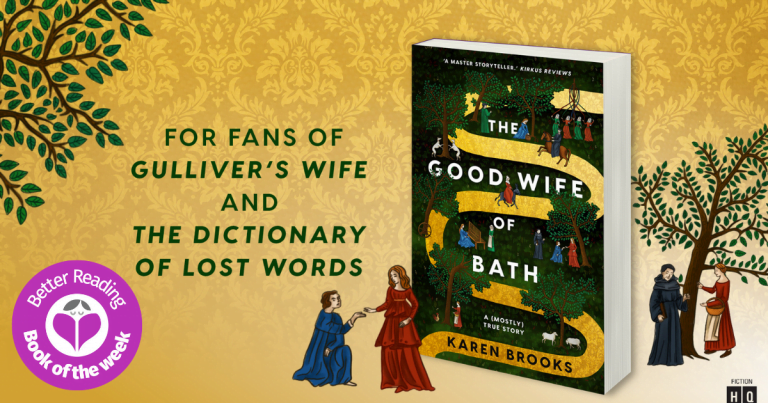
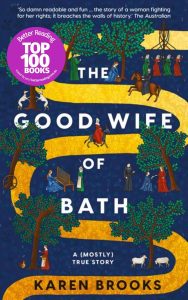
For those of you unfamiliar with the ‘Wife of Bath,’ it is one of the best-known poems from Chaucer’s famous Canterbury Tales. Over the years, the figure of the wife has become something of a paradox who has been regarded as everything from a vicious misogynistic caricature designed to mock women, to a strong female character who is not afraid to ridicule men. In The Good Wife of Bath, author Karen Brooks recasts this literary classic, giving a maligned character her own voice, and allowing her to tell her own (mostly) true story.
This wild and witty retelling of Chaucer is split into several parts—each exploring Eleanor’s life with one of her five husbands, and finally on her own. In doing this, Brooks shows readers the limited roles available to women in the middle ages, and how, in spite of this, Eleanor always managed to make the most of her circumstances and ultimately thrive.
As a character, Eleanor is a smart, resourceful and feisty lead who—despite making more than a few questionable decisions, particularly when it comes to her taste in men—you can’t help but fall in love with. And yes, like the poem suggests, she might also be bawdy and lusty and terribly ill-behaved for a woman of her standing in society … but that’s half the fun!
Karen Brooks’ funny, picaresque and clever retelling of Chaucer’s ‘Wife of Bath’ is a cutting assessment of what happens when male power is left unchecked. It’s a rich, rollicking yet ultimately important read that finally reclaims Eleanor’s story for her own.





Leave a Reply