What inspired the idea behind this book?
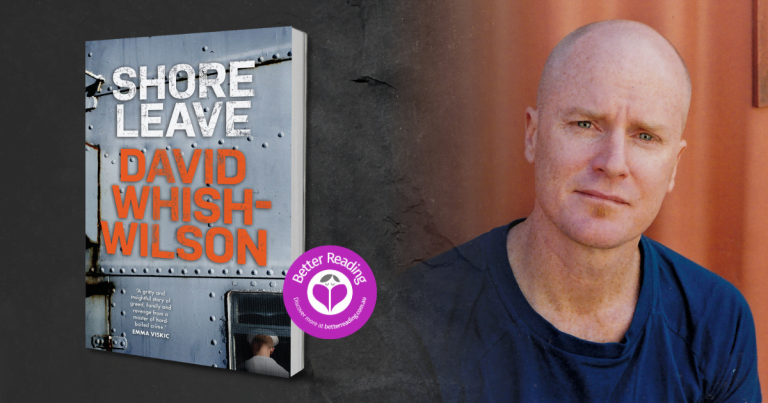
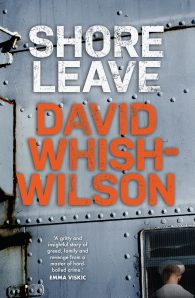
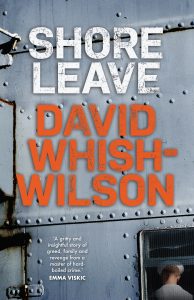
A couple of things. When I was younger I worked as a bartender and occasional doorman at a dive bar in Tokyo, where after midnight most of the male customers were American sailors and marines. I got to know a few of them and they told me of their stories about life on board US aircraft carriers and other vessels. They were usually easy-going types and I got on well with most of them, although it was a pretty rough bar and there were plenty of brawls. Prior to that I’d lived in Mombasa, Kenya, where many of my friends were working prostitutes. One weekend an American ship entered port, and although my friends were excited about making some good money (many of them supported entire families), they were also nervous because the last time an American ship was in port a friend of theirs’ had been murdered. Unfortunately, that weekend something similar happened, when a woman was viciously attacked, and yet once the ship had departed there was nothing to be done. The disturbing idea that there was a potential serial killer using service aboard a US carrier as cover and opportunity is something that’s never left me. My own memories of US servicemen and women in Australian ports was more benign – I remembered when the US aircraft carriers would dock in Fremantle when I was a kid, and I’ve endeavoured to cover that period, as well as some of the other stories I’ve learned over the years in the form of Shore Leave, the fourth Frank Swann novel in my crime series.
(Previously published authors) Does the creative process get easier for you with each book?
Yes and no. Yes, because I’ve learned to trust myself, and to understand that a big part of me needs to write. Because of years of writing practice, my mind is now conditioned to respond when I’m at my desk, and to work subconsciously to problem-solve behind the scenes, whether I’m washing the dishes or walking the dog. No, because there’s always that anxiety produced by the empty page, and because I don’t plot my novels out, that anxiety never really dissipates until I’ve pressed ‘The End’.
How did you think of the title of the book?
The subject matter – US Navy personnel in an Australian port, pretty much suggested the title, although Tom Waits’ song by the same name is a favourite of mine, and I’m sure that had something to do with it as well.
What is something that has influenced you as a writer?
It started with a very mobile upbringing – my family moved a lot when I was young (according to my mother, we moved 21 times around Australia before I was ten.) That meant a lot of reading – I discovered that the characters in books were reliable friends and could bridge the movement to another town, and another school. Later, I was lucky to travel around the world for a decade, and again, books were something that I depended upon for company and stimulation, and to help me make sense of the world. I think it’s fair to say that my desire to write developed out of a combination of these two things.
What’s your daily writing routine like and what are you working on at the moment?
I write as much as possible, although I don’t get to write every day. My ideal writing day is to work three shifts, writing in the morning with a break for lunch (and a siesta) before another shift writing in the afternoon. Where possible, I try and follow that up with a few hours of editing and reflecting upon the work late at night, when the rest of my family is asleep. At the moment, I’m working on a historical crime novel set in Cork, London, Sydney, New York and San Francisco in the early part of the nineteenth century, about an escaped Irish-Australian criminal who made his way to the US and became something of a celebrity there. Because I also like to write creative non-fiction, I’m working on a book about Sea Shepherd, ethology and fish behaviour, pirate fishing and modern-day sea slavery off the coasts of Africa.



Leave a Reply