Does the creative process get easier for you with each book?
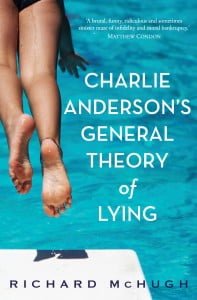
No! It gets harder! At least, the process of writing this second book was much harder than the first time around. My first novel, Charlie Anderson’s General Theory of Lying, had a straight-forward structure (a linear narrative told through the alternating perspectives of a married couple), and I knew how it was going to end as I wrote it.
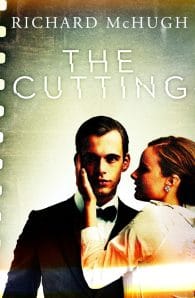
In The Cutting I was much more ambitious, but also less focused. When I started writing I wasn’t sure how the novel was going to end, and I set too many hares running. There are four main characters; originally there were five. Will is an engineer in his mid-20s at an iron ore mine. He loses his job on the first page of the book. His girlfriend, Justine, is two or three years older. She runs a refugee activist organisation in Sydney. Lance is a 40-something iron ore heir; Will worked at his mine. And Will’s mum, Lee-Anne, works for a boss who’s blackmailing her. In Part One, the narrative moves backwards and forwards in time, establishing each character’s story. In Part Two, it’s a continuous narrative as all the stories collide.
That was a lot to juggle when you’re trying to write comic realism. It led to some major changes in the edit, and three main drafts. The book is much better for all that, the pace is quicker, the writing is tighter. But the editorial process was no fun at all.
How does it feel to hold your book in your hands?
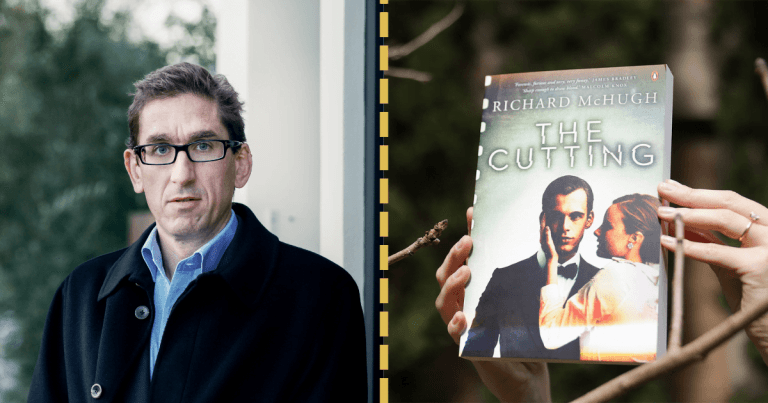
It’s a singular feeling. There’s the immediate satisfaction of touching the concrete thing you’ve poured so much into. But there’s also the realisation that you’re no longer in control of it. Peeling open the package from your publisher and holding that first copy of your book is the moment it hits you that the music has stopped. All those words coming and going and shifting around on the page for years, over which you had absolute control, are now fixed in place. The book has a life of its own after that. I find it almost impossible to read the published novel. I’m too worried I’ll want to change it.
How did you think of the title of the book?
I didn’t like the original working title, but as the publication date loomed in front of us no one could think of anything better.
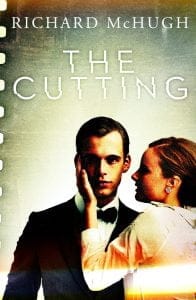
Then my partner came up with the new title a few days before the book had to be sent off to the printers. The houses overlooking the old tramway cutting at Bronte beach have become some of the most expensive real estate in Sydney. The Cutting, as it’s called, is where one of the main characters in the novel lives, and where the strands of the story meet at the end. There’s also a suggestion of violence in the word that makes you wonder, who or what will it be directed to?
What’s some great advice you’ve received that has helped you as a writer?
The best advice I’ve had was given to me by Cheryl Akle, who runs Better Reading, about a decade ago. It was just keep going. Her point was that when you feel stuck it’s a mistake to keep going back over that troublesome passage or – worse – over a novel’s first five pages. Apart from anything else, the more you work a text, the more overwritten it tends to get, and it becomes so familiar you lose the ability to judge for yourself. So you have to keep moving forward. That way you can get some momentum back.
But I would add this: not everything you write when you just keep going will be any good. You need to be even more open than normal to cutting it back, or cutting it out altogether, in the edit.
What are some of your favourite books?
I’m not usually into historical fiction, but Hilary Mantel’s Wolf Hall is my favourite book published in my lifetime. Mantel is a great prose stylist, and her Thomas Cromwell is as perfectly realised a character as I think anyone could write. We named our dog Crumb after him.
I love Jonathan Franzen’s The Corrections. He writes about America with a sense of the comically absurd, and still manages to take his characters seriously as human beings. That’s not easily done.
Jane Austen’s Persuasion is probably my favourite book of all time. I haven’t been able to bring myself to watch the new Netflix version.
I read Joan Didion’s Play It as It Lays last year. That slender novel really stayed with me. She writes in such a spare, brutal style, every word feels corrosive.
Leave a Reply