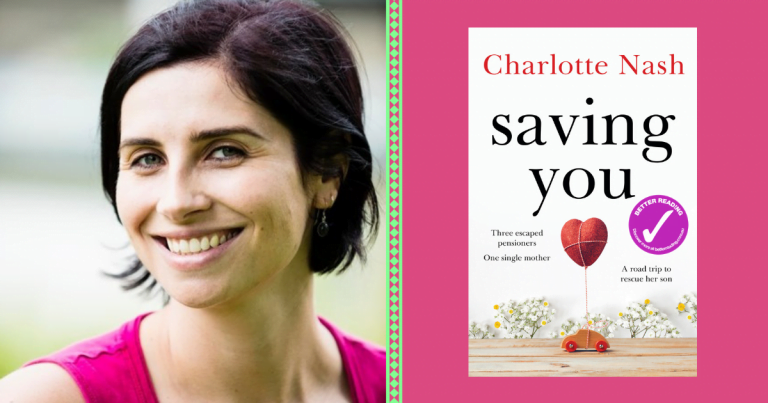
About the author:

Charlotte Nash was born in historic Lincoln, England and grew up in the sunny Redland Shire of Brisbane. Obsessed with horses and riding, she began stealing her mother’s Jilly Cooper novels at the age of thirteen, and has been enthusiastic for romance ever since. Always a little unconventional, she took a meandering path to writing through careers in engineering and medicine, including stints building rockets and as an industrial accident investigator. Now she writes romantic stories, and moonlights as a creative writing PhD student, studying how narratives engage the brain. She lives in a cosy Brisbane cottage with her husband and son, and a small flock of loveable chooks.
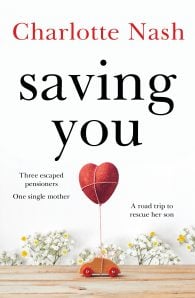
Purchase a copy of Saving You here
Read our full review of Saving You here
WORDS // Charlotte Nash
As a writer of romance and romantic drama (and also speculative fiction), I find the idea of strong female characters comes up a lot. It sounds like something writers and readers definitely want – but do we? And why? And what on earth is the definition of a strong female character?
Many writers I know prefer the idea of complex female characters, rather than strong ones, because ‘strength’ so often is associated with physical prowess and emotional distance. But I actually think we can link strength and complexity, if we use the concepts ofyield strength and ultimate strength, two properties borrowed from materials science terminology.
Ultimate strength – as it suggests – is a breaking point. Snap a plastic ruler, and you’ve stressed that ruler beyond ultimate strength. People can be stressed beyond breaking point, too. Yield strength, on the other hand, is where stress on the material causes irreversible change – when a bend is permanent, like what happens when you crumple your car’s bumper on that pole you didn’t see. Load a material below yield strength and the material is elastic – it bounces back like a rubber ball. Above yield, it deforms. And the same thing can happen to characters.
For me, strong characters spend (or have spent) time above their yield. They experience overload, and re-formation.
This is the strength that can be celebrated through characters who are carers (in every sense, including parents and especially single parents). Those roles come with sustained overload. The days demand endurance, perseverance and persistence, and generate experience, tolerance, resilience, adaptability and grace.
Writing these kinds of characters – such as single parents – matters hugely, for two reasons. Firstly, because through them we can see other ways of being strong besides the physical, which is good for everyone. Men and women both need to appreciate the strength we are using when we’re yielding, changing, learning how to stand up in the everyday storm. Secondly, because it means these characters can believably be women – performing the roles we still overwhelmingly perform.
The idea of strength as something that leads us to change also allows for flaws, foibles and eccentricities, because such marks on character are the price of yielding, too. We give and we break, and we don’t always heal. And so we have complexity in these characters, born from the kind of strength that allows us to adapt, to do what must be done, for another’s good and quite likely with no promise of glory.
These are the strong female characters. The ones who went past yield, perhaps past breaking, who changed and who can ask: how different are we now? Very. And we are stronger.






Leave a Reply