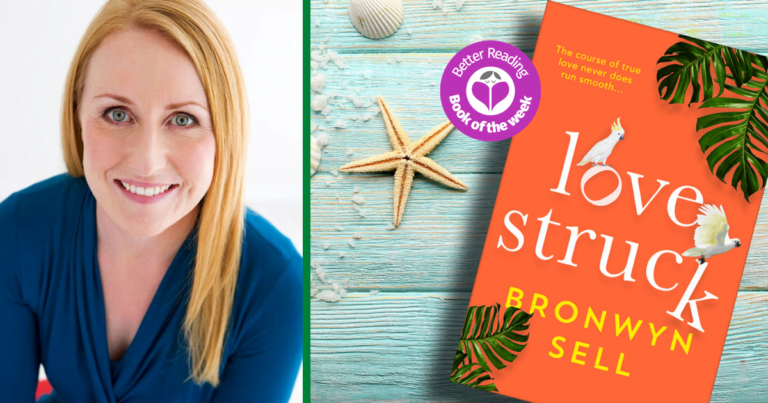
What are you hoping the reader will take away from reading your book?
I’d like readers to be left with a feeling rather than a takeaway message – a feeling that they’ve had an uplifting escape from life for a day or two. We all need that sometimes. For me, there’s no better respite than an escapist novel, so that’s what I set out to write. That said, I guess a takeaway of the book is that life is messy and imperfect and sometimes it’s best to just roll with it.
What’s the easiest and most difficult parts of your job as a writer?
The part that comes easiest for me is writing dialogue. It might sound crazy but it’s like I can hear my characters talking and I’m just taking dictation as fast as I can type. I probably missed my calling as a scriptwriter. The hardest part is the criticism. I’m a sensitive soul and I suffer from anxiety, and I don’t know if it’s something I’ll ever get used to. Just when I think I may be getting a little tougher, something will wallop me out of the blue. It’s a peculiar thing, writing novels. I guess it’s like a lot of creative pursuits. You pour little pieces of your heart and soul into something and it can physically hurt when someone tears that work apart. A friend of mine recently sent me a clipping from an Elizabeth Gilbert interview in which she said a bad review can leave her feeling physically sick for days. At first I wasn’t sure if it made me feel better or worse to know that someone of her success can still be affected that dramatically. But I concluded it was a sign that it’s wisest just to accept that the criticism will come, and know that sometimes you have to ride it out. I choose to have a writing life and a big part of writing is sharing it in the hope of connecting with people. To build a community of the right readers, which is always my goal, you have to weed out the wrong readers.
What’s some great advice you’ve received that has helped you as a writer?
I have a quote by the author Neil Gaiman framed on the wall of my study: “This is how you do it: you sit down at the keyboard and you put one word after another until it’s done. It’s that easy, and that hard.” It helps keep me going on the days the writing doesn’t flow.
What’s your daily writing routine like and what are you working on at the moment?
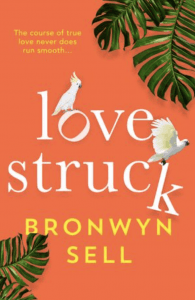
I wish I could say that I’m one of these writers who gets up at 4am to get a head start on the day, and later heads to a café to continue writing, and by midday I’ve hit my word target and can tidy the house before the kids get home from school… But I’m not. In practice, I work part-time in magazines and I freelance, and I have two busy school-age children. Plus, my writing routine varies greatly depending on whether I’m at a writing, editing or promotion stage (and usually it’s a combination of the three because I can have two or three books on the go). So every day is different, as is every week and every month. I’ve become better at working in small chunks of time, though I treasure the rare occasions I can block out the real world and disappear into my fictional ones for days at a time. At the moment, I’m working on a connected novel to Lovestruck, following the journeys of two more members of the island family—Carmen and Cody. I’m loving returning to the island and delving deeper into the characters. They feel like good friends now. I think it may be a while before I let them go.


Leave a Reply