About the author:
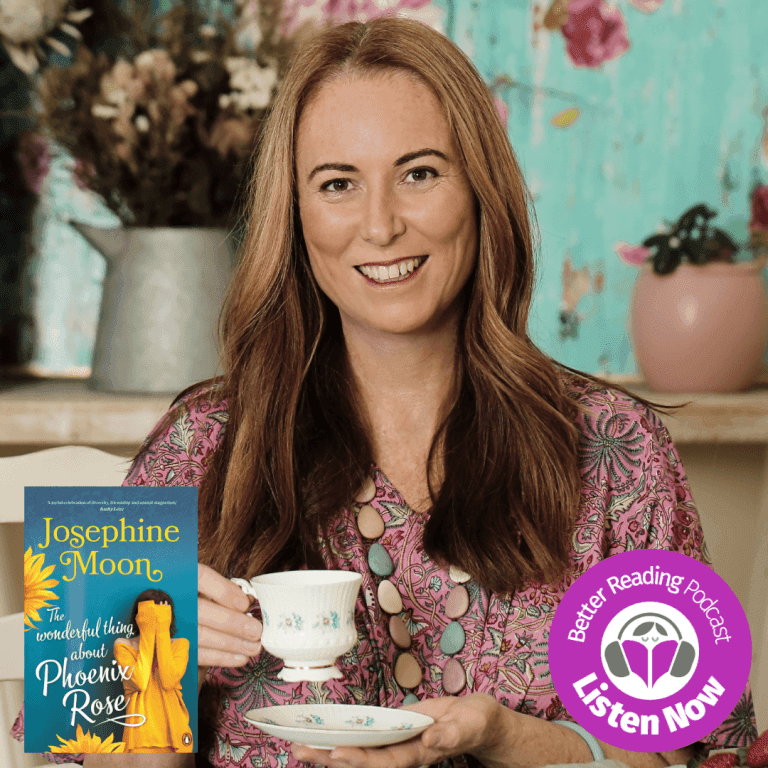
Josephine Moon was born and raised in Brisbane, had a false start in Environmental Science before completing a Bachelor of Arts in Communication and then a postgraduate degree in 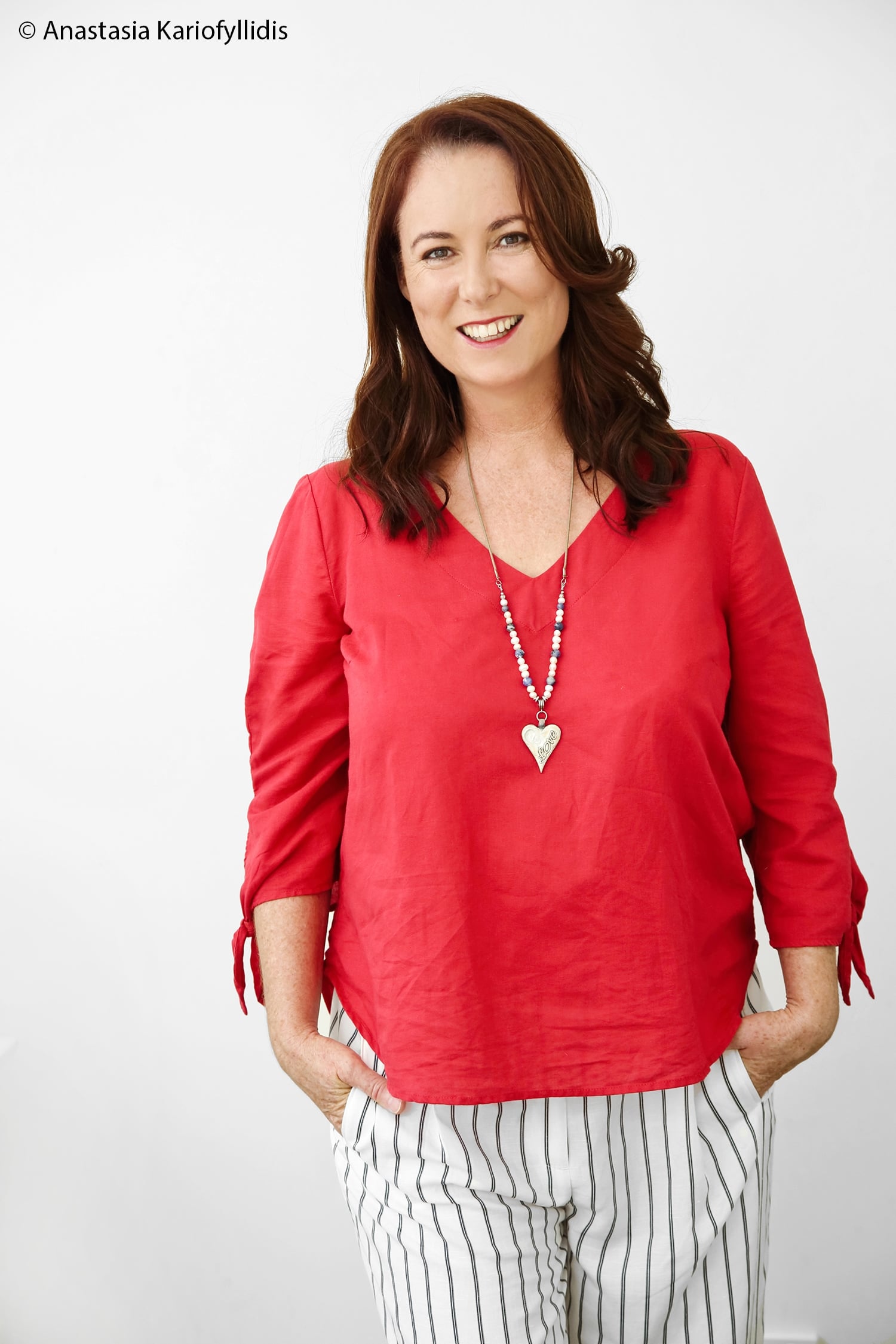 education. Twelve years and ten manuscripts later, her first novel The Tea Chest was picked up for publication and then shortlisted for an ABIA award. Her bestselling contemporary fiction novels are published internationally. They include The Tea Chest, The Chocolate Promise, The Beekeeper’s Secret, Three Gold Coins and The Gift of Life.
In 2018, Josephine organised the ‘Authors for Farmers’ appeal, raising money to assist drought-affected farming communities. She is passionate about literacy, and is a proud sponsor of Story Dogs and The Smith Family.
She now lives on acreage in the beautiful Noosa hinterland with her husband and son, and a tribe of animals that seems to increase in size each year. She wouldn’t have it any other way.
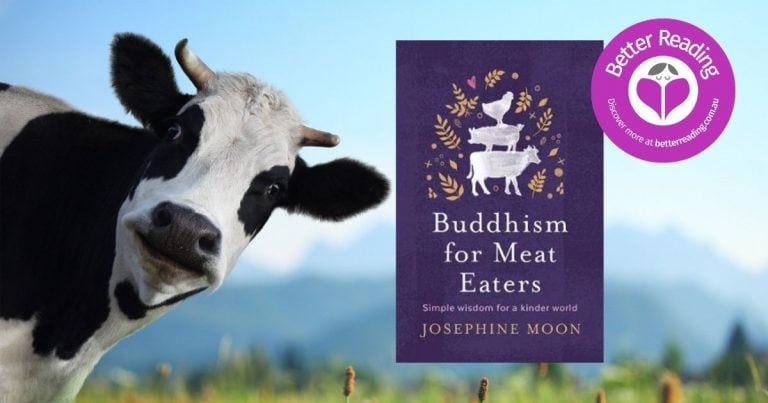
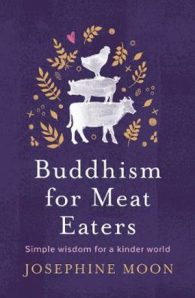
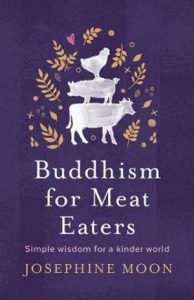
Buy a copy of Buddhism for Meat Eaters here. // Read our review of Buddhism for Meat Eaters here.
Your latest book, Buddhism for Meat Eaters is a little different to your usual books. Can you tell us a bit more about why that is?
I am lucky that I have a job where I’m able to write about whatever topic I’m passionate about. These interests inspire my fiction writing but also give me an opportunity to create non-fiction works such as this one. This is my second non-fiction title. The first one was called Horse Rescue: Inspiring Stories of Second Chance Horses and the Lives They Changed (published under the name Joanne Schoenwald in 2015). Buddhism for Meat Eaters explores more aspects of my animal-loving self.
What inspired the idea behind this book?
Essentially, I adore animals and in an ideal life I would be vegan. For decades, I struggled with trying to eat vegan food while my body consistently rejected it. With multiple food intolerances, including almost all the vegetable proteins, I kept failing in my quest. It had been a source of constant unease and shame, until I finally began to find answers to my dilemma in the last place I expected it—the teachings of Buddhism. One night, unable to sleep during a full moon, it was like all the pieces suddenly came together and I knew I wanted to write about the journey I’d been on.
You do a lot of work for animal rights and rescue. Can you tell us more about that?
I have always been one of those people who seem to find all the animals, from injured birds to lost dogs, horses and cattle wandering the street. I founded an environment committee at an engineering firm I worked at and with the corporate money we were given we organized tree plantings, waterway cleanup and sponsored someone to receive training to be a wildlife carer. In my spare time I fundraised for a charity working to end bear bile farming in Asia.
One day, I went to a ‘dogger sale’, where unwanted horses are trucked for auction. At those events, people bid against ‘the dogger’—the man who buys the horses for slaughter for pet food. For the first time, I saw the magnitude of suffering out there, including neglect, starvation, serious untreated injuries, unwanted foals and pregnant mares. I accidentally bought a horse (true story) and he was in the worst condition I’d ever seen. My husband and I quickly decided to take three more horses that day and work out what to do with them when we got home.
The result was we founded our own horse rescue charity, which I ran voluntarily for three years. I learned far more about the depths of horse suffering than I would have ever wanted to know, but once I’d seen it, I couldn’t turn back. It was doing that work and writing about it that caught the attention of publisher who approached me to write Horse Rescue.
We currently live with a lot of animals and most of them are rescues. I continue to donate to charities and promote charities wherever I’m able. The need is vast.
What do you hope the reader will take away from this book?
Ultimately, I hope your sense of compassion is strengthened, for yourself and others. This book is one of hope, of healing and making peace with your body, mind, plate and world. If you are drawn to it, I hope it brings you as much encouragement as it did me.
What are some simple ways to live more compassionately?
- Offer yourself as much compassion as you would someone else.
- Choose organic food wherever possible. The chemicals used in non-organic food production poses a serious threat to our soil, water, air, natural environment and personal health. We need to be nourishing our ecosystem, not taking away from it.
- Invest your money where your ethics lie. It is usually the only real way to get change.
- Eliminate plastics from your life. The amount of plastic around us is overwhelming but even if you only deal with The Big Five (cigarette butts, bags, straws, water bottles and takeaway coffee cups) you are actually achieving quite a lot.
- Let go of judgements about others. You can simply note that you are not in alignment with someone or something, without having to label them or it, or complain about it or rage about it. Instead, give your precious energy to the things you want to see more of in the world. Focus on building up, not taking down.







Leave a Reply