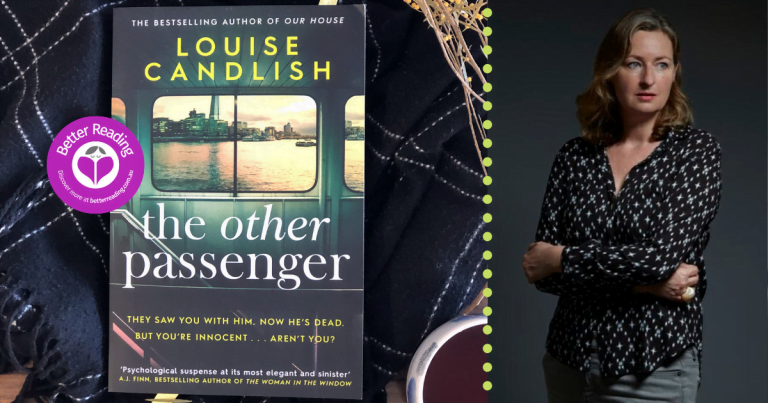
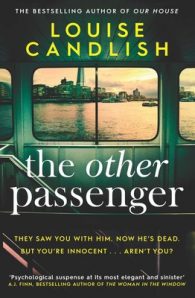
Louise Candlish on the inspiration behind The Other Passenger
How I usually construct a novel is by taking three or four themes and styles that I want to explore and find a way to entwine them, leaving just enough loose stitches for the reader to start pulling and guessing. Readers are very intelligent and thrillers should be puzzles that might actually be solved.
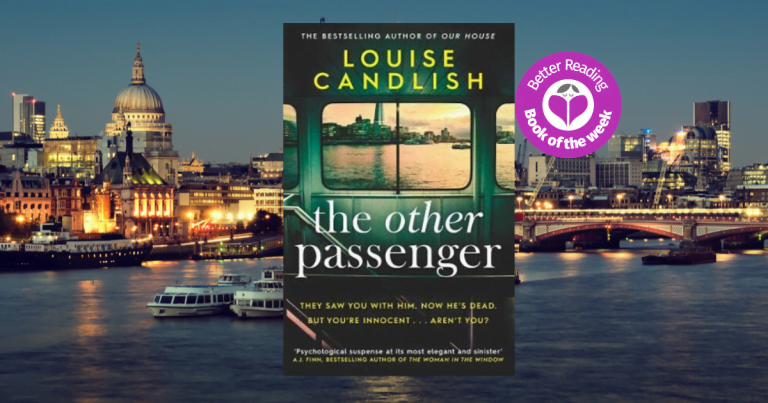
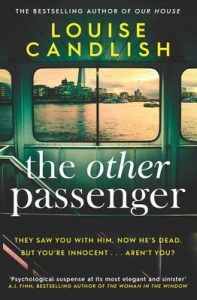
I’d wanted to set a thriller among commuters, but had read quite a few set on trains (including the mighty The Girl on the Train) and the London Underground and I always like to be different – if possible, the first to do something. For a while, I couldn’t think how I could break the mould. Then, one day, I was travelling from Central London to the O2 Arena, which is on the Greenwich Peninsula in southeast London, and the tubes were down. I found the quickest way was by catamaran. The Thames Clippers are river buses that bring commuters into Central London from east and west, but not living by the river, I’d never taken advantage of them. Five minutes in one of those luxurious cream leather seats, G&T in hand, iconic London drifting by, and I knew I had my setting.
Another key strand was my love of noir movies, especially Hitchcock and those Forties classics starring Barbara Stanwyck, like Double Indemnity and Sorry, Wrong Number. I wanted to create a bang-up-to-date noir, a classic story of deception and double crossing starring a thoroughly modern femme fatale. Melia is my millennial Phyllis from Double Indemnity, Jamie her Fred. She’s beautiful, of course, but you can’t manipulate with beauty alone, you also need charisma and a certain vulnerability. Jamie wants to protect her and, if he can think of a way, rescue her. I loved writing Melia.
There’s usually a bit of social commentary in my novels, often ripped from the headlines (like property obsession in Our House), and in The Other Passenger it is generational conflict, specifically between Gen X and millennials. Jamie and Clare are in their late forties, hurtling towards fifty and experiencing separate midlife crises, while Kit and Melia are in their late twenties, facing their own Armageddon in the form of thirty. Their friendship forms far too fast and disintegrates even faster. I am in the Jamie and Clare age group and I remember just how easy it was in my twenties to buy a home and acquire other assets. We left university debt-free and property prices were so affordable it was actually a cheaper option to buy than it was to rent. By comparison, Kit and Melia’s generation hold a losing hand. These two have left college with huge debts and continue to run up further debt because rents are so high and to socialise they must spend beyond their means. The future feels bleak and their discontent is exacerbated by their envy of the complacent Clare and Jamie. Of course, in a thriller, solutions to these perceived injustices might very well involve crime, but in reality, it mostly goes no further than low-level resentment. Until the inheritance comes through, that is, and the cycle starts again.


Leave a Reply