 About the author
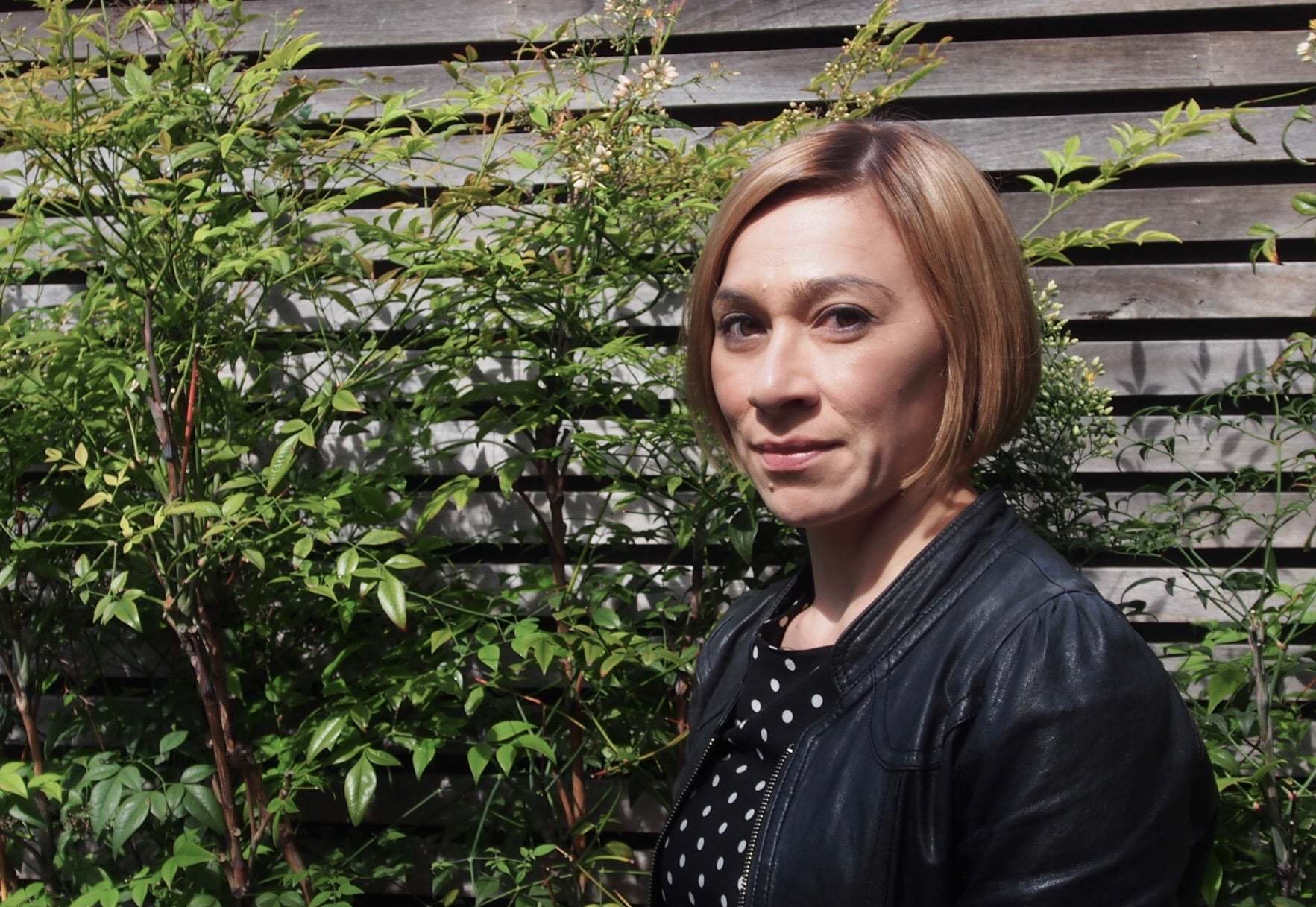
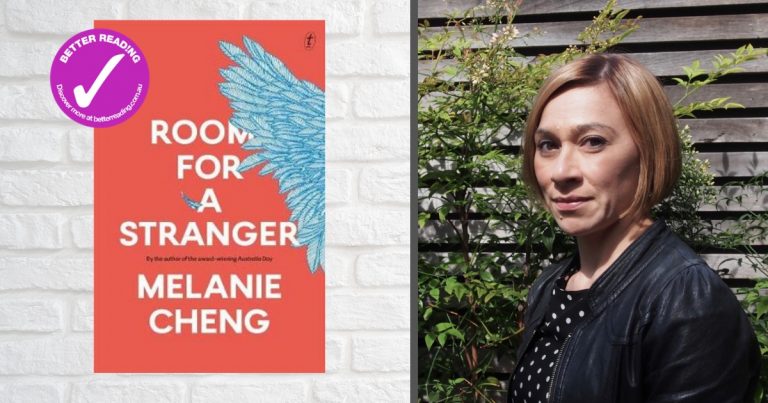
Melanie Cheng is a writer and general practitioner. She was born in Adelaide, grew up in Hong Kong and now lives in Melbourne.
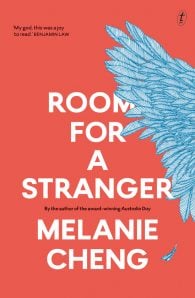
Buy a copy of Room for a Stranger here // Read our review of Room for a Stranger here
Your novel, Room for a Stranger is about an unlikely friendship. Can you tell us a little more about the novel?
Meg is a seventy-five-year-old pensioner living in her family home, alone, with only her African grey parrot, Atticus, for company. Following a shocking home invasion, she reluctantly joins a homeshare program, in search of some companionship and security.
Andy is a twenty-one-year old biomedical student from Hong Kong. He has few friends in Melbourne and is struggling with his studies. When his father’s business collapses, Andy can no longer afford the rent on his Spencer Street apartment and he has no other option but to move into a room in Meg’s house.
Room for a Stranger is the story of Meg and Andy’s relationship—a tentative but ultimately life-changing friendship between two lost and lonely people.
What inspired the idea behind the book?
The idea for the novel had its origins in a story I saw on the ABC about homesharing. I was intrigued by the idea of two people who would not cross paths under ordinary circumstances, suddenly being thrust together in the claustrophobic space of a family home. I’d had direct experience of this during an exchange to Charlottesville, Virginia, during my medical training. I knew how lonely and isolating it can be to live and sleep in somebody else’s home, surrounded by photos of somebody else’s family and objects weighty with somebody else’s memories.
You’re also a general practitioner. How do you fit writing into your busy life as a GP?
It can be a struggle. Before the book deal I wrote in short bursts either early in the morning or late at night when the kids were sleeping. After the book deal I restructured my life and carved out longer and more predictable stretches of time in which to work on the novel. Nowadays I work part-time as a GP and dedicate a full day and a couple of afternoons to writing. I like the mix. It’s a great privilege to be somebody’s family doctor—patients share intimate details of their lives with me. Through the process of writing I try to make sense of the grief and trauma and joy I observe in my life and my work.
What are you working on at the moment?
I have a couple of essays coming out—a creative non-fiction piece about writing other people’s stories in the forthcoming issue of Meanjin, a short memoir about my grandfather in the forthcoming issue of Peril and an essay on ageing which will be published in the Griffith Review. I feel a longer story—possibly a family saga—brewing in the deep recesses of my brain but it’s still in that early, exciting, amorphous stage.
In your downtime, what do you enjoy reading?
I still love short stories—anything by Alice Munro, George Saunders, Cate Kennedy, Jennifer Down, Jenny Zhang and Viet Thanh Nguyen. I also have a soft spot for the short novel/novella. I just discovered Max Porter at the Sydney Writers’ Festival and bawled over Grief is the Thing with Feathers. In recent years I have adored and devoured Elizabeth Strout’s My Name is Lucy Barton, Kent Haruf’s Our Souls at Night and Mirandi Riwoe’s The Fish Girl.



Leave a Reply