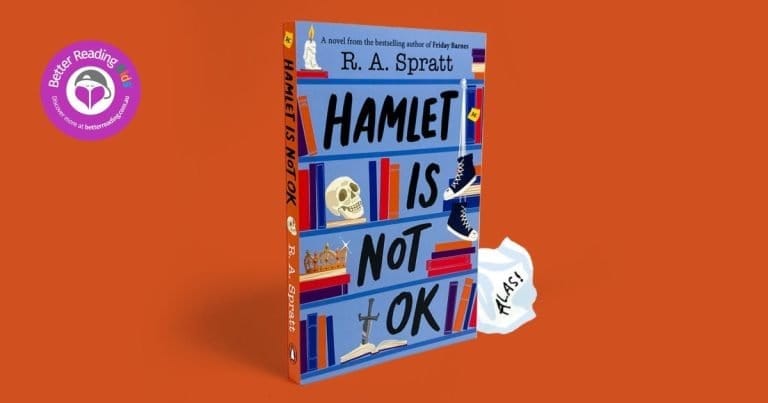
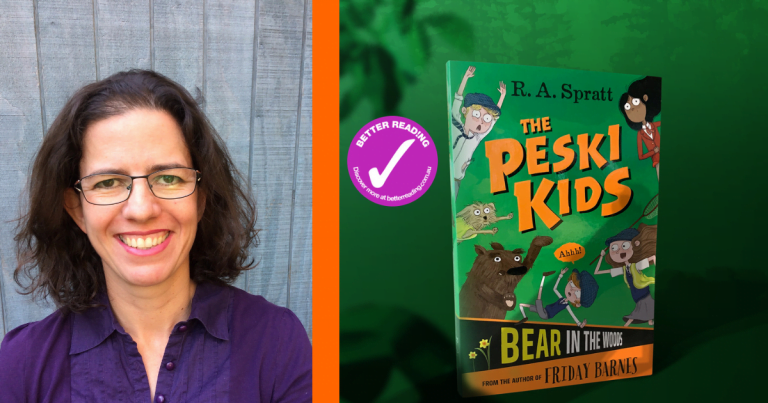
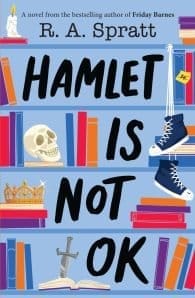
Funny, shocking and brilliant, Hamlet is Not OK is a whip-smart take on Shakespearean moral dilemmas from bestselling author R. A. Spratt.
Touching on themes such as grief and motivation, and utilising techniques such as irony and parody, this book will inspire great discussions in your classroom.
Discussion points and questions
- Shakespeare’s Hamlet was published in 1601 and continues to be one of the most influential pieces of literature in the world. After reading Hamlet is Not OK, do you feel like you have more of an understanding of Shakespeare’s famous play? What is it about R. A. Spratt’s novel that may help a reader grasp the plot and themes of Hamlet?
- In Hamlet is Not OK, Selby and Dan attempt to give Hamlet a happier, or at least less deadly, ending. In intervening with the play’s plot, simple changes have complicated knock-on effects. For example, the character Ophelia is displaced from the play and the climatic final scene takes an entirely different turn. What are other examples of the domino effect in life, or in other books you’ve read?
- Commonly cited themes of Shakespeare’s Hamlet include revenge, honour, corruption, death, deceit, friendship and grief. Did these come across while reading Hamlet is Not OK? Why do you think these themes continue to inspire readers? What are some examples of modern books, films or TV that explore these perennial themes?
- How did R. A. Spratt mirror the themes of Hamlet in the story of Selby and Dan? How does grief affect Dan in comparison to Hamlet? How does guilt shape Selby’s relationship with her mother compared to Hamlet’s relationship with is father?
- The character of Hamlet, the Prince of Denmark, has been assessed and discussed for centuries. What do you make of Selby’s view of him as a man beset with grief and despair, rather than a madman? What evidence is there of grief, compared to mental disorder? What do you think attracted R. A. Spratt to this story, and this character, in particular?
- Hamlet and women: Selby calls Hamlet out for his reproachful attitude towards women. Do you think Hamlet loved Ophelia, and his mother Gertrude? Why do you think he treats them so appallingly? When Hamlet rails against Ophelia and Gertrude how much of it is the character Hamlet and how much of it is William Shakespeare revealing what he personally thinks?
- Hamlet is often described as a ‘revenge tragedy.’ However, unlike the protagonists in Shakespeare’s other revenge plays (Othello and Titus Andronicus for example), in Hamlet we see the prince contemplate the certainty of his revenge, and question his motivations the whole way through. Does this add something to the story? How does R. A. Spratt treat the character’s famous indecision? What are some modern examples of a revenge story in literature or film/TV?
- Many phrases coined by Shakespeare are still in use today some 400 years later. A list of phrases that were first expressed in Hamlet is below. What do you think they mean, and why do you think they are still in use today?
- Brevity is the soul of wit
- Conscience doth make cowards of us all
- The cat will mew and dog will have his day
- I must be cruel only to be kind
- In my mind’s eye
- Murder most foul
- Neither a borrower nor a lender be
- O, woe is me
- Sweets to the sweet
- The lady doth protest too much
- There’s method in my madness
- To thine own self be true
- What a piece of work is man
- Witching time of night
- The below famous quotes are spoken by Polonius (Ophelia’s father). These quotes sound wise, but Polonius is a foolish character. How does this affect our perception of the words? Why does Shakespeare give these wise platitudes to a fool to say?
- Neither a borrower nor a lender be
- To thine own self be true
- Brevity is the soul of wit
- We see Selby’s motivations change throughout the novel, and chapter 13 marks a turning point for the course of the plot. Here Selby progresses from a passive spectator of Hamlet to a motivated heroine. This is called character development. What inspired her change? Can you think of times from your own life, or examples from other stories, where someone progresses from one position to another? What does this add to the story, and our enjoyment of it as readers?
- Selby can sometimes feel like she doesn’t fit in: her parents love books and reading while she finds it difficult; her siblings are academic while she prefers the storytelling of TV; her small town is claustrophobic. This is a trope in literature call the ‘outsider protagonist’ or more colloquially a ‘fish out of water’ story. What are some other examples of outsider protagonists in books? Why do you think this is a common characterisation technique in stories?
- Author R. A. Spratt has been a television writer and a comedy writer. What are some of the writing techniques employed in Hamlet is Not OK that might also work in TV writing? What does the strategic use of dialogue, for example, give the novel’s pace and plotting?
- Do you feel differently about a story when listening to the words being read aloud? Shakespeare’s plays were intended to be acted, with the drama and pageantry of the stage. How does the act of reading Shakespeare compare to watching a live performance of it, or listening to a reading? What are some favourite audiobooks, radio plays or podcasts?
- R. A. Spratt often includes pop culture references in her writing, those referred to in Hamlet is Not OK include the book Men Are from Mars, Women Are from Venus and the TV show Colombo. How do these references impact our experience of reading the novel?
- Both R. A. Spratt and William Shakespeare use humour in their writing. Humour serves many purposes. It can be used to lighten the mood, relieve dramatic tension and develop characters. It can also be used to challenge the audience’s perception, getting them to think about an idea in a different way. Discuss examples of these techniques throughout Hamlet is Not OK and how they enrich the story.



Just because someone is 16 years old does not mean that all relationships are legal. If there is an imbalance of power – for example, between teacher and student or coach and athlete – it can still be considered exploitation. The law protects young people from being taken advantage of. Visit https://crimlawcanada.ca/what-is-the-age-of-consent-in-canada-understanding-consent-and-sexual-assault-laws/ to learn about how trust, power and consent fit together to better understand how such cases are handled.