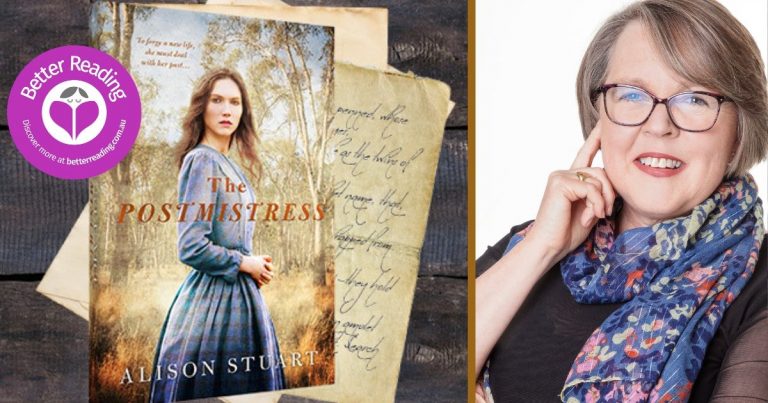
About the author
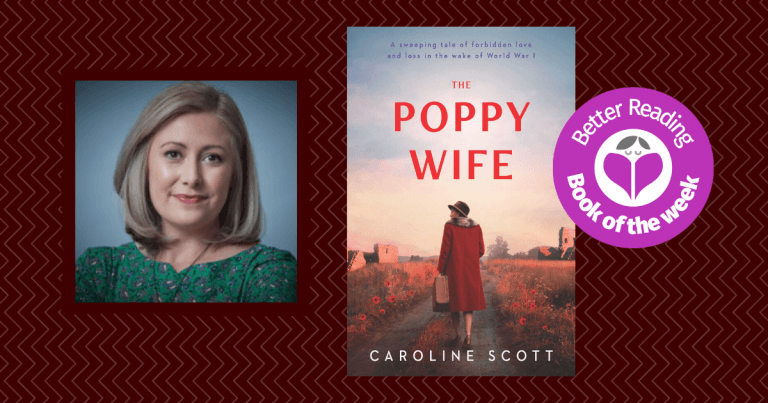
Australian author Alison Stuart began her writing journey halfway up a tree in the school playground with a notebook and a dream. Her father’s passion for history and her husband’s love of adventure and the Australian bush led to a desire to tell stories of Australia’s past.
She has travelled extensively and lived in Africa and Singapore. Before turning to writing full time, she enjoyed a long and varied career as a lawyer, both in private practice and in a range of different organisations, including the military and the emergency services.
Alison lives in a historic town in Victoria.
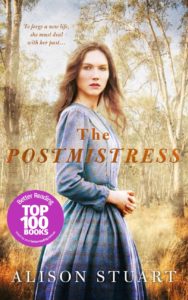
Buy a copy of The Postmistress here
Read our review of The Postmistress here
Your novel The Postmistress is described as a tale of loss, desire and courage that is full of the terror and the beauty of the Australian bush. Can you tell us a bit more about the book?
You don’t have to go far in looking at the history of the goldfields to find it was a melting pot of people from across the world. It stood to reason that many of those early settlers came to Australia to start a new life, whether they were leaving behind poverty or crime (or both) or, like Adelaide and Caleb, they were escaping disgrace and humiliation or the effects of war. Even in the 1870s, while Melbourne flourished, beyond its boundaries the bush held a myriad of strange creatures and hidden dangers – snakes and spiders that could kill and bushfires that could wipe out whole settlements. So I had the fun of putting all these elements together and throwing them at my unsuspecting protagonists to see how they would react and if the external forces ranged against them would draw them together or drive them apart.
What inspired the idea behind this novel?
First and foremost, I am Australian and I am immensely proud of our history. Also, I think there is a real hunger in Australian readers to read books about our country written with an Australian voice. However I have to confess it was a huge departure from my previous works so it was a matter of casting around for a suitable setting for the small-town story that had been nagging at the back of my mind. In the end the decision was simple and I went to a corner of Victoria I know and love…Walhalla. In its day it had been one of Australia’s most successful goldfields and had some interesting stories that I could draw on. In short it ticked all the boxes. Of course I am also a Victorian and gold is writ large in our history so it was fun to explore a different location from the more usual Ballarat/Bendigo settings used by other writers.
What was your research process like for the novel?
I have to confess that I have found the research for a comparatively modern (for me) novel, a great deal more demanding than my stories set in earlier times, mostly because of the abundance of information available – newspapers, books and online resources. The challenge as a writer is knowing exactly how much research is enough. Good research is like spice to a soup…too much overwhelms the dish but not enough makes for a bland read. I know I hate reading those books where the author does a data dump (‘How clever am I…just look how much information on 18th century Paris I have gleaned, now let me share it with you).
I am a lawyer by trade, so the intricacies of hard rock gold mining is way beyond me. Fortunately I am married to an engineer who has proved to be an able, competent and patient research assistant – mostly because he knows he has to explain complex industrial processes in words of two syllables or less. He also has a bad case of gold fever!
I trawled Trove, the free search engine created by the National Library of Australia, for contemporary newspaper reports of the period and, finally, I am a visual person and nothing beats visiting the place you are writing about. My own home town of Williamstown makes an appearance and Walhalla (which forms the basis of the fictional town of Maiden’s Creek in the story) has been one of my ‘go to’ places for decades. I had great fun spending a week in Walhalla with a writer’s hat on and I particularly recommend a visit to the Long Tunnel Mine (which became the Maiden’s Creek Mine in the book). And do not underestimate the transformative power of a visit to Sovereign Hill and the gold museum in Ballarat where you can literally walk the streets and talk to people who know all about boilers and battery stampers. That experience is literally… gold!
This is an Australian historical tale…can you share with us something interesting that you’ve learnt about Australian history through the process of writing this book?
Did you know that Australia was partly responsible for the enormous war reparation that Britain had to pay the United States at the conclusion of the American Civil War?
On 25 January 1865 a Confederate war ship (CSS Shenandoah) docked in Williamstown. The crew and officers were feted around Melbourne and when the ship came to sail, it had on board 42 new crew members straight off the docks in Melbourne. It went on to cause mayhem in the Pacific, destroying the US whaling fleet, in ignorance of the fact that the war had ended. In the subsequent legal case brought against Britain for its role in aiding the Confederate cause, the assistance provided in the form of 42 British sailors who boarded the ship in Melbourne was cited against the British. Britain paid out US$15.5 million in gold to the United States – billions in today’s money.
What’s your daily writing routine like and what are you working on at the moment?
I am now in the fortunate position of describing myself as a full-time writer and I have never worked so hard in my life! There are two parts to being a professional writer – the creative side and the business side. It took a while, but I am now in something of a routine where I address the ‘business’ of writing in the morning and sometimes the evening, have an early lunch and spend the afternoon writing. This is a strange reversal for me because I’ve always been a morning person but it seems to work! To mix it up a little, a couple of times a month I choose different places to write such as the local library or the State Library of Victoria.
I am currently working on the second Maiden’s Creek story (working title The Schoolmistress) which picks up with a different set of protagonists shortly after the end of The Postmistress. As long as my editor likes it, it will be out in June/July next year!


Leave a Reply